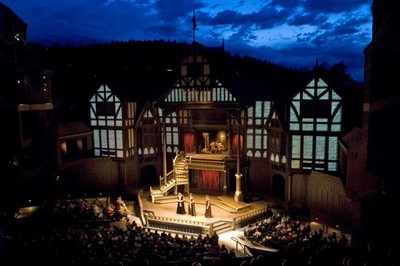
Theatre was very important in Elizabethan entertainment and was a key reason why this time period is often described as a Golden Age.
At the start of the Elizabethan period, actors and theatres were unpopular.
By 1603, the theatre was thriving.
There were:
- Several theatres in London, including the Globe.
- Acting companies such as the Lord Chamberlain's Men.
- Great playwrights, including William Shakespeare.
Reasons why theatre succeeded:
- Patrons: key members of the nobility and gentry, like the Earl of Leicester, formed companies of actors.
- Investors: men like Richard Burbage invested money in new theatres.
- Money: rising wealth meant more people could build theatres and attend plays.
- The Queen: Elizabeth saw the theatre as a good way of promoting her own power.
Theatre was very important in Elizabethan entertainment and was a key reason why this time period is often described as a Golden Age.
At the start of the Elizabethan period, theatres were unpopular and actors seen as little better than beggars.
By 1603, the theatre was thriving.
There were:
- Seven theatres in London, including the Globe.
- Several acting companies, including the Queen's Men and the Lord Chamberlain's Men (to which Shakespeare belonged).
- Great playwrights, including William Shakespeare.
Reasons why theatre succeeded:
- Patrons: key members of the nobility and gentry, like the Earl of Leicester, formed companies of actors.
- Entrepreneurs: men like Richard Burbage invested money in new theatres.
- Prosperity: rising wealth meant more people could build theatres and attend plays.
- The Queen: Elizabeth saw the theatre as a good way of promoting her own power and her support made it more socially acceptable.
For more detail, read here.
Theatre was very important in Elizabethan entertainment and was a key reason why this time period is often described as a Golden Age.
At the start of the Elizabethan period, theatres were unpopular and actors seen as little better than beggars.
By 1603, the theatre was thriving.
There were:
- Around 20,000 Londoners out of a population of 200,000 visiting the theatre each week.
- Seven theatres in London, including the Globe which was built in 1599 from the timbers of the Theatre..
- Several acting companies, including the Queen's Men and the Lord Chamberlain's Men (to which Shakespeare belonged).
- Great playwrights, including William Shakespeare and Christopher Marlowe.
Reasons why theatre succeeded:
- Patrons: key members of the nobility and gentry, like the Earl of Leicester and Sir Francis Walsingham, formed companies of actors.
- Entrepreneurs: men like Richard Burbage invested money in new theatres.
- Prosperity: rising wealth meant more people could build theatres and attend plays.
- The Queen: Elizabeth saw the theatre as a good way of promoting her own power and her support made it more socially acceptable.
For more detail, read here.