Note: the Globe is still examined as part of the section on Elizabethan Life but this page was written for the 2019 exam when the Globe was the Historic Environment Study. For 2020 the Historic Environment is the Spanish Armada.
First check you know about Elizabethan Theatre.
Why was the Globe built?
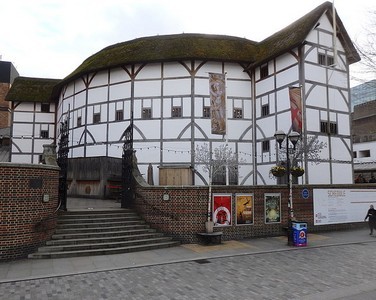
The Globe was built in 1599 by Richard Burbage and William Shakespeare. It was built from the timbers of The Theatre whose puritan landowner wouldn't renew its lease.
Location
The Globe was built on the south bank of the River Thames, outside the city walls of London as theatres were not allowed in the city centre. This area was busy and popular for entertainment.
What was important about the design and structure?
The Globe was built to make plays more entertaining for the audience:
- Twenty sided shape: everyone had a good view.
- Size: it could hold up to 3,000 people which meant many tickets were cheap.
- The Heavens: a covered area above the stage allowed special effects to be produced.
- Tiring room: a place for the actors to change into spectacular costumes.
- Trapdoor: in the stage for special effects.
Themes of Shakespeare's Plays
Shakespeare's plays contained themes of:
- Love and Romance (e.g. Romeo and Juliet)
- Violence (e.g. sword fights)
- Magic (e.g. the witches in Macbeth)
- Patriotism (e.g. Henry V)
Why was Elizabethan Theatre so successful?
Use the mnemonic: Performing Brilliant Plays Pleased Elizabeth Greatly.
- Patrons - set up Acting Companies, funded theatres and promoted individual plays. They made theatre more respectable.
- Building - the structure and design of purpose built theatres like The Globe, helped to make plays popular.
- Politics - rivals at court promoted different plays to try to make them look good.
- Prosperity - greater wealth meant that more theatres were built and more people went to watch plays.
- Elizabeth - liked theatre which made it more respectable and links to patrons and politics: key figures put on plays to try to win favour with the Queen.
- Golden Age - of writers, like Shakespeare, led to new and exciting plays.
Note: the Globe is still examined as part of the section on Elizabethan Life but this page was written for the 2019 exam when the Globe was the Historic Environment Study. For 2020 the Historic Environment is the Spanish Armada.
First check you know about Elizabethan Theatre.
Why was the Globe built?
The Globe was built in 1599 by Richard & Cuthbert Burbage and William Shakespeare. It was built from the timbers of The Theatre whose puritan landowner wouldn't renew its lease because he disapproved of theatre. The Burbages provided 50% of the funds and Shakespeare 10%. It was the first theatre to be partly owned by actors. The architect was Peter Street.
Location
The Globe was built on the south bank of the River Thames (known as Bankside), outside the city walls of London, as theatres were banned by the city authorities, believing they brought trouble. This area was busy and popular for entertainment such as bear baiting and theatre. Audiences could travel there easily over London Bridge or using a boat taxi (wherry).
What was important about the design and structure?
The Globe was built to make plays more entertaining for the audience:
- Twenty sided shape: everyone had a good view.
- Size: it could hold up to 3,000 people which meant that standing tickets for groundlings were cheap at only 1 penny.
- The Heavens: a covered area above the stage allowed special effects to be produced.
- Tiring room: a place for the actors to change into spectacular costumes.
- Trapdoor: in the stage for special effects.
Themes of Shakespeare's Plays
Shakespeare's plays contained themes of:
- Love and Romance (e.g. Romeo and Juliet)
- Violence (e.g. sword fights)
- Magic (e.g. the witches in Macbeth)
- Patriotism (e.g. Henry V)
- Classical stories (e.g. Julius Caesar)
Why was Elizabethan Theatre so successful?
Use the mnemonic: Performing Brilliant Plays Pleased Elizabeth Greatly.
- Patrons - set up Acting Companies, funded theatres and promoted individual plays. They made theatre more respectable - e.g. the Early of Leicester's Men and the Lord Chamberlain's Men (of which Shakespeare was a part). Patronage was essential after a 1572 Act punished any actor not belonging to a baron.
- Building - the structure and design of purpose built theatres like The Globe, helped to make plays popular.
- Politics - rivals at court promoted different plays to try to make them look good. Shakespeare's Henry V (1600) possibly glorified the Earl of Essex, hoping that he would be as victorious in Ireland as Henry V had been at Agincourt. Plays were also strictly censored by the Master of Revels from 1578.
- Prosperity - greater wealth meant that more theatres were built and more people went to watch plays.
- Elizabeth - liked theatre which made it more respectable. This links to patrons and politics: key figures put on plays to try to win favour with the Queen.
- Golden Age - of writers, like Shakespeare and Marlowe, led to new and exciting plays. Many plays reflected themes of the Renaissance, such as classical stories (Julius Caesar was probably the first play performed at the Globe), and also far away lands, inspired by Elizabethan voyages.
What can the theatre teach us about Elizabethan Society?
Elizabethan theatre reflected (and contributed to) most aspects of wider society:
- Great Chain of Being: the belief in hierarchy, reflected by the structure of the Globe with the poorest at the bottom and the Lords at the highest tier
- Politics: the theatre reflected the power of leading patrons and played a part in the rivalry between them (e.g. Cecil and Essex 1599-1601).
- Golden Age: plays showed off Renaissance ideas and were a key aspect of the vibrant Elizabethan artistic and literary culture. The theatre also demonstrated the rise of the gentry whose wealth was used to build theatres and fund plays.
- Gloriana: plays were tightly censored by Elizabeth and used to promote the image of Gloriana - the idea of a powerful and successful queen.
Note: the Globe is still examined as part of the section on Elizabethan Life but this page was written for the 2019 exam when the Globe was the Historic Environment Study. For 2020 the Historic Environment is the Spanish Armada.
First check you know about Elizabethan Theatre.
Why was the Globe built?
The Globe was built in 1599 by Richard & Cuthbert Burbage and William Shakespeare. It was built from the timbers of The Theatre whose puritan landowner wouldn't renew its lease because he disapproved of theatre. The Burbages provided 50% of the funds and Shakespeare 10%. It was the first theatre to be partly owned by actors. The architect was Peter Street.
Location
The Globe was built on the south bank of the River Thames (known as Bankside), outside the city walls of London, as theatres were banned by the city authorities, believing they brought trouble. This area was busy and popular for entertainment such as bear baiting and theatre. Audiences could travel there easily over London Bridge or using a boat taxi (wherry).
What was important about the design and structure?
The Globe was built to make plays more entertaining for the audience:
- Twenty sided shape: everyone had a good view.
- Size: it could hold up to 3,000 people which meant that standing tickets for groundlings were cheap at only 1 penny.
- The Heavens: a covered area above the stage allowed special effects to be produced.
- Tiring room: a place for the actors to change into spectacular costumes.
- Trapdoor: in the stage for special effects.
Themes of Shakespeare's Plays
Shakespeare's plays contained themes of:
- Love and Romance (e.g. Romeo and Juliet)
- Violence (e.g. sword fights)
- Magic (e.g. the witches in Macbeth)
- Patriotism (e.g. Henry V)
- Classical stories (e.g. Julius Caesar)
Why was Elizabethan Theatre so successful?
Use the mnemonic: Performing Brilliant Plays Pleased Elizabeth Greatly.
- Patrons - set up Acting Companies, funded theatres and promoted individual plays. They made theatre more respectable - e.g. the Early of Leicester's Men, the Lord Chamberlain's Men (of which Shakespeare was a part) and the Admiral's Men. Patronage was essential after a 1572 Act punished any actor not "belonging to a baron".
- Building - the structure and design of purpose built theatres like The Globe, helped to make plays popular.
- Politics - rivals at court promoted different plays to try to make them look good. Shakespeare's Henry V (1600) possibly glorified the Earl of Essex, hoping that he would be as victorious in Ireland as Henry V had been at Agincourt. Plays were also strictly censored by the Master of Revels from 1578. For example, the play the Isle of Dogs was banned in 1597.
- Prosperity - greater wealth meant that more theatres were built and more people went to watch plays (about 20,000 per week).
- Elizabeth - liked theatre which made it more respectable. This links to patrons and politics: key figures put on plays to try to win favour with the Queen.
- Golden Age - of writers, like Shakespeare and Marlowe, led to new and exciting plays. Many plays reflected themes of the Renaissance, such as classical stories (Julius Caesar was probably the first play performed at the Globe), and also far away lands, inspired by Elizabethan voyages.
What can the theatre teach us about Elizabethan Society?
Elizabethan theatre reflected (and infuenced) most aspects of wider society:
- Great Chain of Being: the belief in hierarchy, reflected by the structure of the Globe with the poorest at the bottom and the Lords at the highest tier. The price of seats ranged from 1d to 2s 6d.
- Politics: the theatre reflected the power of leading patrons and played a part in the rivalry between them (e.g. Robert Cecil and Essex 1599-1601).
- Golden Age: plays showed off Renaissance ideas and were a key aspect of the vibrant Elizabethan artistic and literary culture. The theatre also demonstrated the rise of the gentry whose wealth was used to build theatres and fund plays.
- Gloriana: plays were tightly censored by Elizabeth and used to promote the image of Gloriana - the idea of a powerful and successful queen.