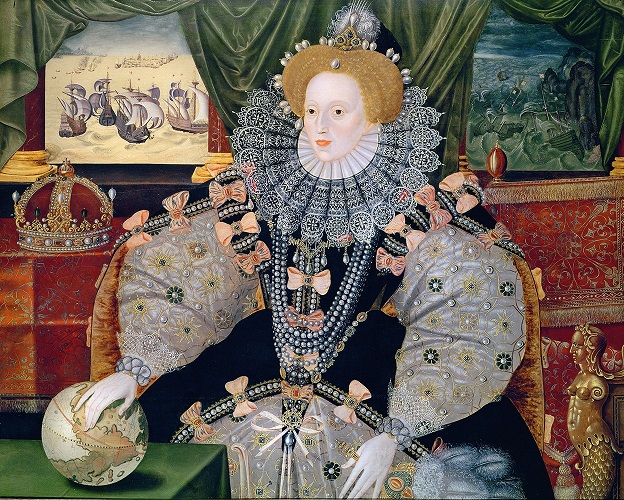
The Armada Portrait celebrates Elizabeth's victory
1. The English Channel
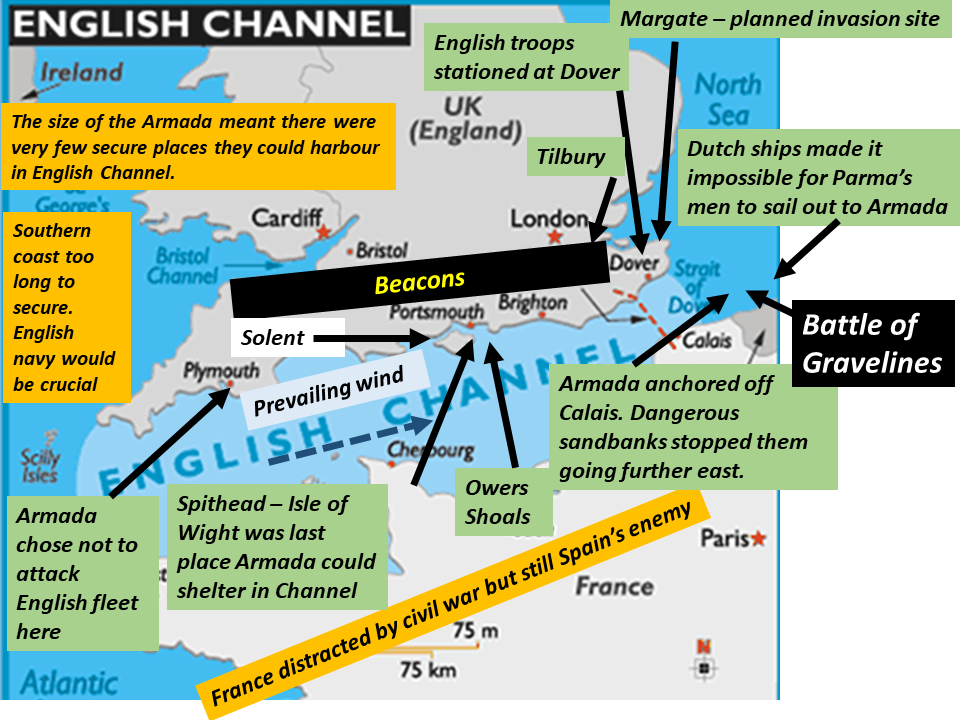
The English Channel made an ambitious Spanish invasion plan even more challenging:
Lack of Harbours: after the Isle of Wight there were no deep water harbours for the Armada to shelter and re-supply. Therefore they were constantly at sea which meant their sailors were exhausted and lacked fresh supplies.
Sandbanks: the Armada was worried about running aground on dangerous sandbanks in the Channel and so they had to turn out to open sea instead of seeking shelter.
Wind: the wind wouldn't allow the Spanish to reach a safe harbour on the Isle of Wight. It also made it difficult for them to return to pick up the Duke of Parma's army after the battle of Gravelines and instead they were blown north around Scotland.
2. Spanish Mistakes
Poor Planning: the Spanish plan depended on the Armada meeting up with the Duke of Parma's army. This was very difficult with poor commuications and both the Dutch Rebels and the English Navy wanting to stop them.
Leadership: The Duke of Medina Sidonia had no experience of fighting at sea.
Ships and Tactics: the Armada was designed to carry troops. It was poorly equipped to fight at sea. The Spanish strategy was to sail alongside English ships and then board them and use soldiers to fight hand-to-hand. Spanish galleons were heavy, slow and difficult to steer.
Weapons: Spanish cannons were not designed to be used at sea and so were very difficult to re-load.
3. English Skill
Leadership: England had leaders like Drake and Hawkins who had experience fighting the Spanish at sea.
Ships and Tactics: English ships were generally smaller and lighter than the Spanish galleons. Many were the new race-built ships. This meant that they were faster and more agile. At the Battle of Gravelines, the English ships sailed close to the Spanish so that their cannons would do more damage. However, they were able to avoid the Spanish grappling hooks and not a single English ship was sunk. Fireships were also very effective at breaking up the Spanish crescent formation.
Weapons: English cannon had a longer range than the Spanish ones so they could attack from further away. They also had wheels which made it much easier to re-load.
The Significance of the Spanish Armada
Religion: England has remained Protestant to this day. Many people believed that God had saved England with his 'Protestant Wind' and so most people in England accepted Protestantism after the defeat of the Armada.
Elizabeth's power was strengthened by the defeat. It boosted the myth of Gloriana.
Naval power: England went on to become a great naval power based on tactics used against the Armada e.g. cannons.
Relations with Spain: The war with Spain continued until 1604.
Links to Wider Elizabethan Society
A popular question is to ask what we can learn from a study of the Spanish Armada. Consider:
Rise of English Naval Power: the defeat of the Armada shows how advanced England's ship design and naval tactics were.
New Technology: the importance of new technology such as the rudder and the triangular sail show that England was a place of scientific development and new technology. See here.
Rising Wealth: although poorer than Spain, England's growing trade and wealth was shown by the increasing number of merchant ships and new shipyards.
Religion: the expected rebellion of 25,000 English Catholics didn't happen. This suggests that there were fewer Catholics in England by 1588 or that their first loyalty was to their country.
1. The English Channel
The English Channel made an ambitious Spanish invasion plan even more challenging:
Lack of Harbours: after the Isle of Wight there were no deep water harbours for the Armada to shelter and re-supply. Therefore they were constantly at sea which meant their sailors were exhausted and lacked fresh supplies.
Sandbanks: the Armada was worried about running aground on dangerous sandbanks such as Owers Shoals and so they had to turn out to open sea instead of seeking shelter.
Wind: the wind wouldn't allow the Spanish to reach a safe harbour on the Isle of Wight. It also made it difficult for them to return to pick up the Duke of Parma's army after the battle of Gravelines and instead they were blown north around Scotland.
2. Leadership & Tactics
Drake and Hawkins had experience fighting the Spanish at sea in the 1570s, unlike the Spanish commander the Duke of Medina Sidonia.
The Spanish plan was unrealistic. They had to defeat the English navy before they could carry the Duke of Parma's army across the channel in open barges.
The Spanish tactics of boarding English ships and then fighting hand-to-hand did not work because the English ships were too quick and agile.
Spain was unprepared for fighting at sea. Their cannons were ineffective and they had more priests than trained gunners.
Fireships were very effective at breaking up the Spanish crescent formation.
3. Ship Design, Technology & Weapons
The Armada was designed to carry troops and was poorly suited for fighting at sea. Spanish galleons were heavy, slow and difficult to steer.
English ships were generally smaller and lighter than the Spanish galleons. Many were the new race-built ships such as Revenge. This meant that they were faster and more agile. At the Battle of Gravelines, the English ships sailed close to the Spanish so that their cannons would do more damage. However, they were able to avoid the Spanish grappling hooks and not a single English ship was sunk.
English cannon had a longer range than the Spanish ones so they could attack from further away. They also had wheels which made it much easier to re-load.
Spanish cannons were not designed to be used at sea and so were very difficult to re-load. At Gravelines, the Spanish struggled to match English gunfire - most Spanish ships fired just one or two rounds a day.
4. Luck
The English were lucky that the wind prevented the Armada from re-grouping and collecting the Duke of Parma's army after the battle of Gravelines.
The Significance of the Spanish Armada
Religion: England has remained Protestant to this day. Many people believed that God had saved England with his 'Protestant Wind' and so most people in England accepted Protestantism after the defeat of the Armada.
Elizabeth's power was strengthened by the defeat. It boosted the myth of Gloriana and reduced opposition.
Naval power: England went on to become a great naval power based on tactics used against the Armada e.g. line of battle.
Relations with Spain: The war with Spain continued until 1604.
Links to Wider Elizabethan Society
A popular question is to ask what we can learn from a study of the Spanish Armada. Consider:
Rise of English Naval Power: the defeat of the Armada shows how advanced England's ship design and navaltactics were.
New Technology: the importance of new technology such as the rudder, the lateen and the astrolabe show that England was a place of scientific development and new technology. See here. It also shows English links with the Italian Renaissance (e.g. Baker's ship designs).
Rising Wealth: although poorer than Spain, England's growing trade and wealth was shown by the increasing number of merchant ships and new shipyards.
Religion: the expected rebellion of 25,000 English Catholics didn't happen. This suggests that there were fewer Catholics in England by 1588 or that their first loyalty was to their country.
Great Chain of Being: the overall commander of the English fleet was the Queen's cousin, Lord Howard of Effingham. This shows the importance of social hierachy. However, the English navy did value talent. Men like Drake and Hawkins were given powerful positions despite not being of noble birth (whereas the Spanish relied more on aristocrats than experienced leaders).
1. The English Channel
The English Channel made an ambitious Spanish invasion plan even more challenging:
Lack of Harbours: after the Isle of Wight there were no deep water harbours for the Armada to shelter and re-supply. Therefore they were constantly at sea which meant their sailors were exhausted and lacked fresh supplies.
Sandbanks: the Armada was worried about running aground on dangerous sandbanks such as Owers Shoals and so they had to turn out to open sea instead of seeking shelter.
Wind: the wind wouldn't allow the Spanish to reach a safe harbour on the Isle of Wight. It also made it difficult for them to return to pick up the Duke of Parma's army after the battle of Gravelines and instead they were blown north around Scotland.
2. Leadership & Tactics
Drake and Hawkins had experience fighting the Spanish at sea in the 1570s, unlike the Spanish commander the Duke of Medina Sidonia. Drake's attack on Cadiz in 1587 weakened the Armada.
The Spanish plan was unrealistic. They had to defeat the English navy before they could carry the Duke of Parma's army across the channel in open barges. With poor communications it was always going to be unlikely that they would both arrive at Calais at the same time.
The Spanish tactics of boarding English ships and then fighting hand-to-hand did not work because the English ships were too quick and agile. This was shown at Gravelines.
Spain was unprepared for fighting at sea. Their cannons were ineffective and they had more priests than trained gunners.
Fireships were very effective at breaking up the Spanish crescent formation.
3. Ship Design, Technology & Weapons
The Armada was designed to carry troops and was poorly suited for fighting at sea. Spanish galleons were heavy, slow and difficult to steer.
English ships were generally smaller and lighter than the Spanish galleons. Many were the new race-built ships such as Revenge. This meant that they were faster and more agile. At the Battle of Gravelines, the English ships sailed close to the Spanish so that their cannons would do more damage. However, they were able to avoid the Spanish grappling hooks and not a single English ship was sunk.
English cannon had a longer range than the Spanish ones so they could attack from further away. They also had wheels which made it much easier to re-load.
Spanish cannons were not designed to be used at sea and so were very difficult to re-load. At Gravelines, the Spanish struggled to match English gunfire - most Spanish ships fired just one or two rounds a day.
4. Luck
The English were lucky that the wind prevented the Armada from re-grouping and collecting the Duke of Parma's army after the battle of Gravelines.
Complex Thinking
Try to explain how different factors link:
The wind direction was more of a problem for the Spanish than the English because Spanish galleons were less manoeuvrable.
English skill provoked Spanish mistakes: for example the English fleet prevented the Spanish from sheltering on the Isle of Wight; Fireships successfully caused panic amongst the Spanish and broke up their defensive crescent formation.
The Significance of the Spanish Armada
Religion: England has remained Protestant to this day. Many people believed that God had saved England with his 'Protestant Wind' and so most people in England accepted Protestantism after the defeat of the Armada.
Elizabeth's power was strengthened by the defeat. It boosted the myth of Gloriana and reduced opposition.
Naval power: England went on to become a great naval power based on tactics used against the Armada e.g. line of battle.
Relations with Spain: The war with Spain continued until 1604.
Links to Wider Elizabethan Society
A popular question is to ask what we can learn from a study of the Spanish Armada. Consider:
Rise of English Naval Power: the defeat of the Armada shows how advanced England's ship design and navaltactics were.
New Technology: the importance of new technology such as the rudder, the lateen and the astrolabe show that England was a place of scientific development and new technology. See here. It also shows English links with the Italian Renaissance (e.g. Baker's ship designs).
Rising Wealth: although poorer than Spain, England's growing trade and wealth was shown by the increasing number of merchant ships and new shipyards.
Religion: the expected rebellion of 25,000 English Catholics didn't happen. This suggests that there were fewer Catholics in England by 1588 or that their first loyalty was to their country.
Great Chain of Being: the overall commander of the English fleet was the Queen's cousin, Lord Howard of Effingham. This shows the importance of social hierachy. However, the English navy did value talent. Men like Drake and Hawkins were given powerful positions despite not being of noble birth (whereas the Spanish relied more on aristocrats than experienced leaders).