The English Navy developed dramatically in the 50 years before the Armada:
1. New Technology
New technology enabled sailors to find their way more accurately and made ships easier to steer. See this page.
2. Growth in Trade
After a slump in trade with Europe in the 1550s, England sought out new trading routes. The rise in global trade and an increase in privateers meant that there were more sailors and merchant ships that Elizabeth could call on in an emergency. The demand for ships also increased the skill of shipbuilders.
3. New Designs
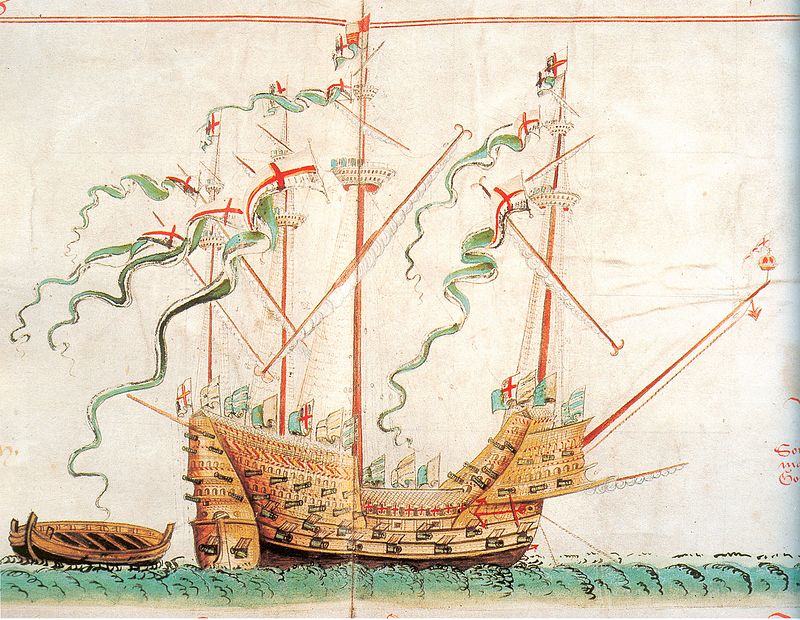
Before Queen Elizabeth, warships were floating castles (e.g. the Great Harry, Henry VIII's flag ship. They were designed as a floating base for troops to climb aboard the enemy ships. But they were slow and difficult to turn.
During Elizabeth's reign, new designs were brought in that made English ships faster, more agile and designed to fight at sea:
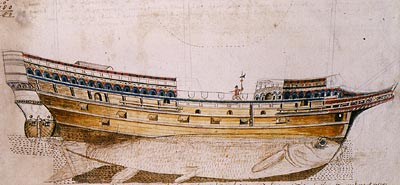
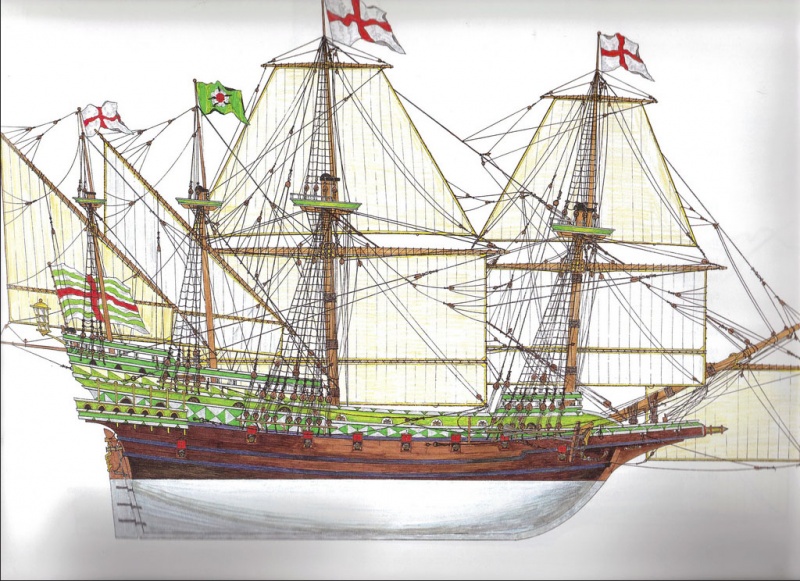
Ships were designed to be thinner and lower in the water. They no longer had high castles and were known as race-built ships. This made them sleeker and faster. Matthew Baker was an important ship-builder who used geometry and mathematics in his designs. He was influenced by Italian shipyards and was unusual in drawing up detailed paper plans . The ship Revenge was an important example of the new race-built ships that would revolutionise naval warfare for the next 300 years. This new design enabled ships to fire broadsides from a distance rather than grappling at close quarters. It was the favourite ship of Sir Francis Drake who used it in the Cadiz raid and the Armada. It was considered by far the best of the new ships.
Matthew Baker designed the new 'race-built' ships, imitating the shape of fish.
Hawkins also introduced long range cannon, designed for fighting at sea.
New sails made them easier to turn.
These were probably the best warships anywhere in the world.
4. Government Support
Henry VIII founded the English Navy - for the first time it had a permanent fleet of purpose-built warships.
The navy developed further under Mary I, ironically with encouragement from her husband, Philip II.
Elizabeth appointed John HawkinsTreasurer of the Royal Navy in 1577. As war with Spain looked likely, he organised the building of new ships.
Hawkins encouraged the new designs: he wanted to pound the enemy from afar using a ship’s speed and manoeuvrability to stay safely away from the enemy’s lethal grappling hooks. His ships had the latest rigging enabling them to sail closer to the wind and be faster and more manoeuvrable than the Spanish ships.
Hawkins also increased the pay of sailors to attract more motivated and skilled men.
Elizabethan social hierarchy was reflected on board ships - cabins were limited to senior officers while sleeping arrangements for ordinary sailors were very basic. However professional ability and personal qualities were seen as more important than birth or social position.
5. Remaining Weaknesses
In 1588 the English Navy only had 24 galleons that were the new 'race-built' design.
The Queen was so desperate to save money that the navy lacked proper equipment.
The ships carried a wide variety of cannon which made supplying them more difficult.
The old design of war ship is shown by Henry VIII's flag ship, the Great Harry.
The Revenge was built in 1577 by Matthew Baker. It was one of the new 'race-built' ships.
The English Navy developed dramatically in the 50 years before the Armada:
1. New Technology
New technology enabled sailors to find their way more accurately and made ships easier to steer. See this page.
2. Growth in Trade
The rise in trade and privateers meant that there were more sailors and merchant ships that Elizabeth could use in an emergency. The demand for ships increased the skill of shipbuilders.
3. New Designs
Before Queen Elizabeth, warships were floating castles (e.g. the Great Harry, Henry VIII's flag ship. They were designed as a floating base for troops to climb aboard the enemy ships. But they were slow and difficult to turn.
During Elizabeth's reign, new designs were brought in that made English ships faster, more agile and designed to fight at sea:
Ships were designed to be thinner and lower in the water. They no longer had high castles and were known as race-built ships.
Matthew Baker designed the new 'race-built' ships, imitating the shape of fish.
Hawkins also introduced long range cannon, designed for fighting at sea.
New sails made them easier to turn.
These were probably the best warships anywhere in the world.
4. Government Support
Henry VIII founded the English Navy - for the first time it had a permanent fleet of purpose-built warships.
John Hawkins was made Treasurer of the Royal Navy in 1577. As war looked likely, he organised the building of new ships to fight Spain.
5. Remaining Weaknesses
In 1588 the English Navy only had 24 galleons that were the new 'race-built' design.
The Queen was so desperate to save money that the navy lacked proper equipment.
The English Navy developed dramatically in the 50 years before the Armada:
1. New Technology
New technology enabled sailors to find their way more accurately and made ships easier to manoeuvre. See this page.
2. Growth in Trade
The rise in trade and privateers meant that there were more sailors and merchant ships that Elizabeth could use in an emergency. The demand for ships increased the skill of shipbuilders.
3. New Designs
Before Queen Elizabeth, warships were floating castles (e.g. the Great Harry, Henry VIII's flag ship. They were designed as a floating base for troops to climb aboard the enemy ships. But they were slow and difficult to turn.
During Elizabeth's reign, new designs were brought in that made English ships faster, more agile and designed to fight at sea:
Ships were designed to be thinner and lower in the water. They no longer had high castles and were known as race-built ships. This made them sleeker and faster. Matthew Baker was an important ship-builder who used geometry and mathematics in his designs. The ship Revenge was an important example of the new race built ship that would revolutionise naval warfare for the next 300 years. This new design enabled ships to fire broadsides from a distance rather than grappling at close quarters. It was the favourite ship of Sir Francis Drake who used it in the Cadiz raid and the Armada. It was considered by far the best of the new ships.
Matthew Baker designed the new 'race-built' ships, imitating the shape of fish.
Hawkins also introduced long range cannon, designed for fighting at sea.
New sails made them easier to turn.
These were probably the best warships anywhere in the world.
4. Government Support
Henry VIII founded the English Navy - for the first time it had a permanent fleet of purpose-built warships.
It developed further under Mary I.
Elizabeth appointed John HawkinsTreasurer of the Royal Navy in 1577. As war with Spain looked likely, he organised the building of new ships.
Hawkins also increased the pay of sailors.
5. Remaining Weaknesses
In 1588 the English Navy only had 24 galleons that were the new 'race-built' design.
The Queen was so desperate to save money that the navy lacked proper equipment.
The ships carried a wide variety of cannon which made supplying them more difficult.
The English Navy developed dramatically in the 50 years before the Armada:
1. New Technology
New technology enabled sailors to find their way more accurately and made ships easier to manoeuvre. See this page.
2. Growth in Trade
After a slump in trade with Europe in the 1550s, England sought out new trading routes. The rise in global trade and an increase in privateers meant that there were more sailors and merchant ships that Elizabeth could call on in an emergency. The demand for ships also increased the skill of shipbuilders.
3. New Designs
Before Queen Elizabeth, warships were floating castles (e.g. the Great Harry, Henry VIII's flag ship. They were designed as a floating base for troops to climb aboard the enemy ships. But they were slow and difficult to turn.
During Elizabeth's reign, new designs were brought in that made English ships faster, more agile and designed to fight at sea:
Ships were designed to be thinner and lower in the water. They no longer had high castles and were known as race-built ships. This made them sleeker and faster. Matthew Baker was an important ship-builder who used geometry and mathematics in his designs. He was influenced by Italian shipyards and was unusual in drawing up detailed paper plans . The ship Revenge was an important example of the new race-built ships that would revolutionise naval warfare for the next 300 years. This new design enabled ships to fire broadsides from a distance rather than grappling at close quarters. It was the favourite ship of Sir Francis Drake who used it in the Cadiz raid and the Armada. It was considered by far the best of the new ships.
Matthew Baker designed the new 'race-built' ships, imitating the shape of fish.
Hawkins also introduced long range cannon, designed for fighting at sea.
New sails made them easier to turn.
These were probably the best warships anywhere in the world.
4. Government Support
Henry VIII founded the English Navy - for the first time it had a permanent fleet of purpose-built warships.
The navy developed further under Mary I, ironically with encouragement from her husband, Philip II.
Elizabeth appointed John HawkinsTreasurer of the Royal Navy in 1577. As war with Spain looked likely, he organised the building of new ships.
Hawkins encouraged the new designs: he wanted to pound the enemy from afar using a ship’s speed and manoeuvrability to stay safely away from the enemy’s lethal grappling hooks. His ships had the latest rigging enabling them to sail closer to the wind and be faster and more manoeuvrable than the Spanish ships.
Hawkins also increased the pay of sailors to attract more motivated and skilled men.
Elizabethan social hierarchy was reflected on board ships - cabins were limited to senior officers while sleeping arrangements for ordinary sailors were very basic. However professional ability and personal qualities were seen as more important than birth or social position.
5. Remaining Weaknesses
In 1588 the English Navy only had 24 galleons that were the new 'race-built' design.
The Queen was so desperate to save money that the navy lacked proper equipment.
The ships carried a wide variety of cannon which made supplying them more difficult.