Sanitation did not improve much during the Renaissance but there were some attempts to make it better.
Water Supply: In 1602 Edmund Colthurst tried to build a 38 mile channel was dug to divert the River Lee to provide fresh water to London. He ran out of money but the project was then completed in 1614. It helped but it wasn't enough for the growing population. Some local authorities paid for piped water supplies. By 1750 many people paid private companies for water from stand pipes.
Streets: new laws were passed in the 1600s to clean up the streets but these were not enforced and the towns became filthier as they grew bigger.
Sewage: there were no effective measures taken in this period although some towers had open sewers in the streets.
Epidemics: the government took more effective measures than in the Middle Ages (see Great Plague) and started to record deaths through Bills of Mortality which aided understanding. However ideas were still based on superstition and miasma.
The rich were reluctant to pay taxes to improve public health. They lived in the cleaner parts of towns and so public health problems affected them less. The government believed in laissez-faire which meant that they didn't think it was their job to interfere in the lives of the people.
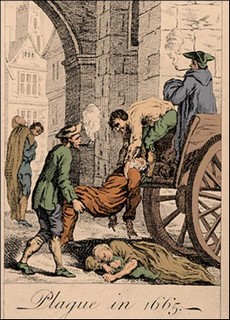
Bring out your dead
Sanitation did not improve much during the Renaissance but there were some attempts to make it better. New laws were passed in the 1600s to clean up the streets but these were not enforced and the towns became filthier as they grew bigger.
The Great Plague hit London in 1665 and around 100 000 people were killed in the city. The Mayor of London successfully prevented the spread of the disease beyond the city:
Searchers were appointed to identify plague victims and then whole houses were quarantined (shut up for a month).
Watchmen prevented victims and their families from leaving and food was brought to the door.
Bodies were collected at night and buried outside the city.
Large gatherings of people were banned, e.g. at theatres, sports matches and pubs.
Rakers were appointed to clean the streets.
However some measures made things worse, e.g. killing cats and dogs as they would have been useful in controlling the rat population.
The Great Plague shows us that people in the 1600s still did not understand the causes of disease. Like at the time of the Black Death in 1348, people blamed God or miasma (bad air). But government was slightly better organised and able to help.
Sanitation did not improve much during the Renaissance but there were some attempts to make it better.
Water Supply: a 38 mile channel was dug to divert the River Lee to provide fresh water to London in the early 1600s. It helped but it wasn't enough for the growing population. By 1750 many people paid private companies for water from stand pipes.
Streets: new laws were passed in the 1600s to clean up the streets but these were not enforced and the towns became filthier as they grew bigger.
Sewage: there were no effective measures taken in this period although some towers had open sewers in the streets.
Epidemics: the government took more effective measures than in the Middle Ages (see Great Plague).
The rich were reluctant to pay taxes to improve public health. They lived in the cleaner parts of towns and so public health problems affected them less. The government believed in laissez-faire which meant that they didn't think it was their job to interfere in the lives of the people.
Sanitation did not improve much during the Renaissance but there were some attempts to make it better.
Water Supply: In 1602 Edmund Colthurst tried to build a 38 mile channel was dug to divert the River Lee to provide fresh water to London. He ran out of money but the project was then completed in 1614. It helped but it wasn't enough for the growing population. Some local authorities paid for piped water supplies. By 1750 many people paid private companies for water from stand pipes.
Streets: new laws were passed in the 1600s to clean up the streets but these were not enforced and the towns became filthier as they grew bigger.
Sewage: there were no effective measures taken in this period although some towers had open sewers in the streets.
Epidemics: the government took more effective measures than in the Middle Ages (see Great Plague) and started to record deaths through Bills of Mortality which aided understanding. However ideas were still based on superstition and miasma.
The rich were reluctant to pay taxes to improve public health. They lived in the cleaner parts of towns and so public health problems affected them less. The government believed in laissez-faire which meant that they didn't think it was their job to interfere in the lives of the people.