By the start of the 1900s, Germ Theory was widely accepted as the cause of infectious disease. Research teams continued to work to identify the specific bacterium that caused each disease.
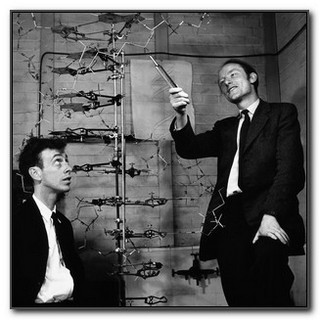
The main progress in the twentieth century in explaining the cause of disease has been DNA science. DNA was first discovered in the 1800s, but the major breakthrough was in 1953 when Crick and Watson discovered the structure of DNA - a double helix. Crick and Watson worked at Cambridge University.
Factors that helped:
- Individual genius;
- Teamwork - Crick and Watson worked well together;
- Technology - X-Ray crystallography provided the key breakthrough;
Significance:
DNA is likely to change most areas of medicine. It helps to explain the causes of diseases such as heart disease, cancers, diabetes and dementia. A first draft of the human genome (a complete map of one person's DNA) was completed
in 2000. Today we can use genetic screening to identify those at high risk of developing certain diseases (to enable them to alter
their lifestyle, for example). Gene therapy is the latest technology that aims to repair genetic faults in every cell in the body.
By the start of the 1900s, Germ Theory was widely accepted as the cause of infectious disease. Research teams continued to work to identify the specific bacterium that caused each disease.
The main progress in the twentieth century in explaining the cause of disease has been DNA science. DNA was first discovered in the 1800s and scientists had a basic understanding of heredity but could not explain how DNA works. The major breakthrough was in 1953. This is when Crick and Watson discovered the structure of DNA - a double helix. This helped them to understand how DNA replicates, using RNA. Crick and Watson worked at Cambridge University and built models to try to estimate the structure of DNA. In London, a rival group, Rosalind Franklin and Maurice Wilkins used X-Ray crystallography to research
DNA's structure.
A key moment was when Wilkins showed Watson photograph 51 which gave him the idea of a double helix.
Factors:
- Individual genius - all four were brilliant scientists
- Teamwork - Crick and Watson worked well together, Wilkins and Franklin didn’t
- Technology - X-Ray crystallography provided the key breakthrough
- Chance - that Wilkins showed Watson photograph 51 as he'd just had an argument with Franklin
Significance:
DNA is likely to change most areas of medicine. It helps to explain the causes of diseases such as heart disease, cancers, diabetes and dementia. A first draft of the human genome was completed
in 2000. Today DNA is already opening up personalised medicine. We can use genetic screening to identify those at high risk of developing certain diseases (to enable them to alter their lifestyle, for example). Genetic selection enables doctors to screen embryos to avoid inherited diseases. Gene therapy (e.g. Crispr CAS9) is the latest technology that aims to repair genetic faults in every cell in the body.
By the start of the 1900s, Germ Theory was widely accepted as the cause of infectious disease. Research teams continued to work to identify the specific bacterium that caused each disease.
The main progress in the twentieth century in explaining the cause of disease has been DNA science. DNA was first discovered in the 1800s and scientists had a basic understanding of heredity but could not explain how DNA works. The major breakthrough was in 1953. This is when Crick and Watson discovered the structure of DNA - a double helix. This helped them to understand how DNA replicates, using RNA. Crick and Watson worked at Cambridge University and built models to try to estimate the structure of DNA. In London, a rival group, Rosalind Franklin and Maurice Wilkins used X-Ray crystallography to research
DNA's structure.
A key moment was when Wilkins showed Watson photograph 51 which gave him the idea of a double helix.
Factors:
- Individual genius - all four were brilliant scientists
- Teamwork - Crick and Watson worked well together, Wilkins and Franklin didn’t
- Technology - X-Ray crystallography provided the key breakthrough
- Chance - that Wilkins showed Watson photograph 51 as he'd just had an argument with Franklin
Significance:
DNA is likely to change most areas of medicine. It helps to explain the causes of diseases such as heart disease, cancers, diabetes and dementia. A first draft of the human genome was completed
in 2000. Today DNA is already opening up personalised medicine. We can use genetic screening to identify those at high risk of developing certain diseases (to enable them to alter their lifestyle, for example). Genetic selection enables doctors to screen embryos to avoid inherited diseases. Gene therapy (e.g. Crispr CAS9) is the latest technology that aims to repair genetic faults in every cell in the body.