

1665 |
Middle Ages |
The Renaissance |
Industrial Revolution |
Twentieth Century |
The Great Plague
The Great Plague hit London in 1665 and around 100 000 people out of a population of 600 000 were killed in the city. The Mayor of London successfully prevented the spread of the disease beyond the city:
- Searchers were appointed to identify plague victims and then whole houses were quarantined (shut up for a month).
- Watchmen prevented victims and their families from leaving and food was brought to the door.
- Bodies were collected at night and buried outside the city.
- Large gatherings of people were banned, e.g. at theatres, sports matches and pubs.
- Rakers were appointed to clean the streets.
However some measures were counter-productive, e.g. killing cats and dogs as they would have been useful in controlling the rat population.
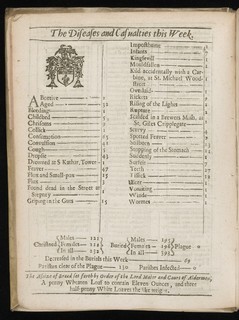
The Great Plague shows us that people in the 1600s still did not understand the causes of disease. Like at the time of the Black Death in 1348, people blamed God or miasma (bad air). However, lists of deaths, Bills of Mortality, were made in each parish. These showed that poorer areas suffered more from plague than wealthier ones which made people challenge the Theory of the Four Humours and believe more in miasma.
The response to the Great Plague was partly effective, showing that government was stronger than at the time of the Black Death.