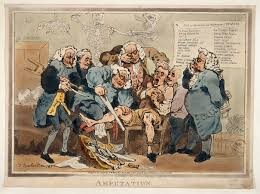
Surgery in the early 1800s had not really improved since the days of Paré in the 1500s. The formation of the Company of Surgeons in 1745 separated them from barbers but three main problems remained:
Pain: there were no reliable anaesthetics. The surgeon would rush to minimise the suffering of their patient and the patient would be wriggling about. Therefore surgery had to be quick and crude - it was impossible to be precise. Although opium and alcohol had been tried they did not completely remove the pain and many surgeons avoided them as they could thin the blood, increasing blood loss.
Infection: there was no understanding of germs and half of all patients died from septicaemia.
Blood Loss: ligatures were used to reduce blood loss but there was no way to replace lost blood.
Therefore surgery was fast, crude and highly dangerous. About 50% of patients died.
Surgery in the early 1800s was barbaric, crude and often fatal.
Surgery in the early 1800s had not really improved since the days of Paré in the 1500s.
Three main problems remained:
Pain: there were no reliable anaesthetics. The surgeon would rush to reduce the suffering of their patient and the patient would be wriggling about. Therefore surgery had to be quick and crude - it was impossible to be precise.
Infection: there was no understanding of germs and half of all patients died from infection.
Blood Loss: ligatures were used to reduce blood loss but there was no way to replace lost blood.
Therefore surgery was fast, crude and highly dangerous. About 50% of patients died.
Surgery in the early 1800s had not really improved since the days of Paré in the 1500s.
Three main problems remained:
Pain: there were no reliable anaesthetics. The surgeon would rush to minimise the suffering of their patient and the patient would be wriggling about. Therefore surgery had to be quick and crude - it was impossible to be precise. Although opium and alcohol had been tried they did not completely remove the pain and many surgeons avoided them as they could thin the blood, increasing blood loss.
Infection: there was no understanding of germs and half of all patients died from septicaemia.
Blood Loss: ligatures were used to reduce blood loss but there was no way to replace lost blood.
Therefore surgery was fast, crude and highly dangerous. About 50% of patients died.
Surgery in the early 1800s had not really improved since the days of Paré in the 1500s. The formation of the Company of Surgeons in 1745 separated them from barbers but three main problems remained:
Pain: there were no reliable anaesthetics. The surgeon would rush to minimise the suffering of their patient and the patient would be wriggling about. Therefore surgery had to be quick and crude - it was impossible to be precise. Although opium and alcohol had been tried they did not completely remove the pain and many surgeons avoided them as they could thin the blood, increasing blood loss.
Infection: there was no understanding of germs and half of all patients died from septicaemia.
Blood Loss: ligatures were used to reduce blood loss but there was no way to replace lost blood.
Therefore surgery was fast, crude and highly dangerous. About 50% of patients died.