English Sailors and their Voyages
In Tudor times, sailors travelled the world, exploring new lands, making great discoveries and collecting great wealth. This is one reason why Elizabethan times are known as a Golden Age. These voyages gave England:
- Treasure: stolen from Spanish ships and ports; huge wealth was amassed from foreign lands and from the slave trade.
- Territory: these voyages showed Britain's naval power and new lands formed the basis of the British Empire. In 1584 Elizabeth gave Raleigh the right to colonise any non-Christian territory.
- Trade: new goods, markets and trading companies were opened. The Levant Company, founded in 1581, traded across the Mediterranean. The East India Company was formed in 1601 and traded cotton, tea and spices in the Far East.
- Tobacco: new items like tobacco were discovered and introduced to England for the first time.
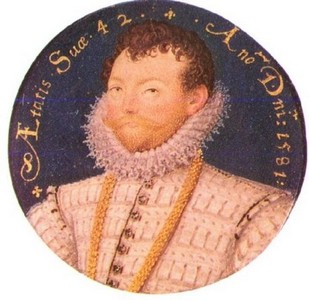
Attacked Spanish ships and stole their treasure. Circumnavigated the world 1577-1580. He brought back so much treasure that the half he gave to Elizabeth was equivalent to a whole year's income. He was an English hero (and was knighted by Elizabeth), but the Spanish regarded him as a pirate. He led the English fleet (with Lord Howard of Effingham) to defeat the Spanish Armada in 1588. Cousin of Hawkins and they traded slaves together.
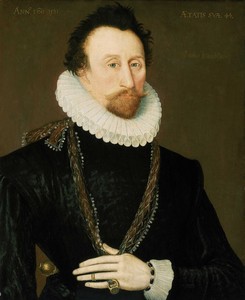
Drake's cousin. He was put in charge of building up the English Navy. Like Drake, he was a privateer (pirate) and together they started the English slave trade, capturing slaves from West Africa in 1564.
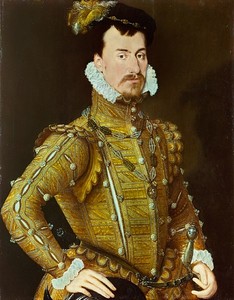
A favourite of Elizabeth. He spent years fighting Catholic rebels in Ireland but is best known for his voyages to South America and North America, where he sponsored the first American colony, Roanoke. (He was later executed for plotting against James I.)
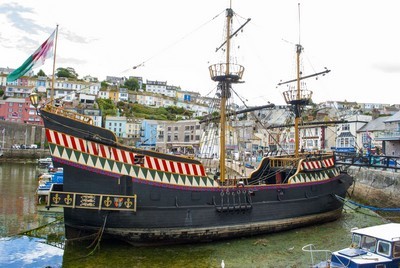
Drake's ship, The Golden Hind.
In Tudor times, sailors travelled the world, exploring new lands, making great discoveries and collecting great wealth. This is one reason why Elizabethan times are known as a Golden Age. These voyages gave England:
- Treasure: stolen from Spanish ships and ports and from the slave trade.
- Territory: these voyages eventually led to new colonies and the British Empire.
- Trade: new goods and markets were opened.
- Tobacco: new items like tobacco were discovered and introduced to England for the first time.
Attacked Spanish ships and stole their treasure. Circumnavigated (sailed all the way round) the world 1577-1580 bringing back a huge amount of treasure. He was an English hero, but the Spanish regarded him as a pirate. He led the English fleet (with Lord Howard of Effingham) to defeat the Spanish Armada in 1588.
Drake's cousin. He was put in charge of building up the English Navy. Like Drake, he was a privateer (pirate) and together they started the English slave trade.
Spent years fighting Catholic rebels in Ireland but is best known for his voyages to South America and North America, where he founded the first English colony.
In Tudor times, sailors travelled the world, exploring new lands, making great discoveries and collecting great wealth. This is one reason why Elizabethan times are known as a Golden Age. These voyages gave England:
- Treasure: stolen from Spanish ships and ports and from the slave trade.
- Territory: these voyages developed England's naval power which formed the basis of England's empire.
- Trade: new goods, markets and trading companies were opened.
- Tobacco: new items like tobacco were discovered and introduced to England for the first time.
Circumnavigated (sailed all the way round) the world 1577-1580. He brought back so much treasure that the half he gave to Elizabeth doubled her income that year. He attacked Spanish ships and stole their treasure. He was an English hero, but the Spanish regarded him as a pirate. He led the English fleet (with Lord Howard of Effingham) to defeat the Spanish Armada in 1588.
Drake's cousin. He was put in charge of building up the English Navy. Like Drake, he was a privateer (pirate) and together they started the English slave trade, capturing slaves from West Africa in 1564.
A favourite of Elizabeth. He spent years fighting Catholic rebels in Ireland but is best known for his voyages to South America and North America, where he founded the first American colony.
In Tudor times, sailors travelled the world, exploring new lands, making great discoveries and collecting great wealth. This is one reason why Elizabethan times are known as a Golden Age. These voyages gave England:
- Treasure: stolen from Spanish ships and ports; huge wealth was amassed from foreign lands and from the slave trade.
- Territory: these voyages showed Britain's naval power and new lands formed the basis of the British Empire. In 1584 Elizabeth gave Raleigh the right to colonise any non-Christian territory.
- Trade: new goods, markets and trading companies were opened. The Levant Company, founded in 1581, traded across the Mediterranean. The East India Company was formed in 1601 and traded cotton, tea and spices in the Far East.
- Tobacco: new items like tobacco were discovered and introduced to England for the first time.
Attacked Spanish ships and stole their treasure. Circumnavigated the world 1577-1580. He brought back so much treasure that the half he gave to Elizabeth was equivalent to a whole year's income. He was an English hero (and was knighted by Elizabeth), but the Spanish regarded him as a pirate. He led the English fleet (with Lord Howard of Effingham) to defeat the Spanish Armada in 1588. Cousin of Hawkins and they traded slaves together.
Drake's cousin. He was put in charge of building up the English Navy. Like Drake, he was a privateer (pirate) and together they started the English slave trade, capturing slaves from West Africa in 1564.
A favourite of Elizabeth. He spent years fighting Catholic rebels in Ireland but is best known for his voyages to South America and North America, where he sponsored the first American colony, Roanoke. (He was later executed for plotting against James I.)