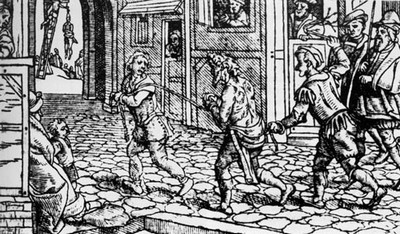
Poverty was a major problem in Tudor England and it became worse in Elizabethan times.
Causes of Poverty
- Growing population.
- Rising food prices caused by poor harvests.
- Unemployment.
Government Action:
In Tudor times the poor were divided into two groups: the deserving poor (who deserved help) and the undeserving poor (who were to be punished). Under Henry VIII, treatment of the undeserving poor became harsher – beggars could be whipped, branded or even hanged.
At the start of Elizabeth's reign:
- Henry VIII's laws still applied, with harsh punishments.
The Middle of her Reign:
- A 1576 law created a new class of poor people – the able-bodied poor who were able to work but unable to find any.
- Local authorities were now responsible for providing work for the able-bodied poor and they started to build almshouses to help the poor.
- National laws still focused on punishment.
The 1601 Poor Law:
- Everyone had to pay a poor rate.
- The poor rates would be used to build workhouses for the poor who were unable to find work (indoor relief).
- The law still allowed whipping and hanging for persistent beggars.
Poverty was a major problem in Tudor England and it became significantly worse in Elizabethan times.
Causes of Poverty
- Dramatic population increase led to higher inflation and lower wages.
- Poor harvests also led to food prices increasing.
- The shift towards sheep farming required far fewer labourers than growing crops and also encouraged the enclosure of common land, reducing grazing for the poor.
- Diseases such as the plague and smallpox left families without a wage earner.
- War with Spain led to higher taxes.
- The Dissolution of the Monasteries created unemployment and meant there was less help for the poor.
Government Action:
In Tudor times the poor were divided into two groups: the deserving poor (who deserved charitable help) and the undeserving poor (who deserved punishment). Under Henry VIII treatment of the undeserving poor became harsher – beggars could be whipped, branded or even hanged.
At the start of Elizabeth's reign:
- Henry VIII's laws still applied, with harsh punishments.
The Middle of her Reign:
- The 1576 Act for Setting the Poor on Work created a new class of poor people – the able-bodied poor who were capable but unable to find work.
- Local authorities were now responsible for providing work for the able-bodied poor.
- Local areas began to build more hospitals, almshouses (homes for the poor paid for by wealthy people’s charitable donations) and workhouses.
- National laws still focused on punishment.
The 1601 Poor Law:
This was a turning point in the treatment of the poor because for the first time the government took a direct responsibility for the welfare of its people.
- Everyone had to pay a poor rate.
- The poor rates would be used to build workhouses for the poor who were unable to find work (indoor relief).
- The old and the sick would be given outdoor relief, i.e. money for food and shelter in an almshouse.
- The law still allowed whipping and hanging for persistent beggars.
Poverty was a major problem in Tudor England and it became significantly worse in Elizabethan times.
Causes of Poverty
- Dramatic population increase (43% from 1550-1600) led to higher inflation and lower wages.
- A series of poor harvests also led to food prices increasing.
- The shift towards sheep farming required far fewer labourers (only about 10%) than growing crops and also encouraged the enclosure of common land, reducing grazing for the poor.
- Diseases such as the plague and smallpox left families without a wage earner
- War with Spain led to higher taxes.
- The Dissolution of the Monasteries created unemployment and meant there was less help for the poor.
Government Action:
In Tudor times the poor were divided into two groups: the deserving poor (who deserved charitable help) and the undeserving poor (who deserved punishment). Under Henry VIII treatment of the undeserving poor became harsher – beggars could be whipped, branded or even hanged.
At the start of Elizabeth's reign:
- Henry VIII's laws still applied, with harsh punishments.
The Middle of her Reign:
- The 1576 Act for Setting the Poor on Work created a new class of poor people – able-bodied but unable to find work (in addition to the deserving and undeserving poor).
- Local authorities were now responsible for providing work to the able-bodied poor.
- Local areas began to build more hospitals, almshouses (homes for the poor paid for by wealthy people’s charitable donations) and workhouses.
- National laws still focused on punishment.
The 1601 Poor Law:
This was a turning point in the treatment of the poor because for the first time the government took a direct responsibility for the welfare of its people. It lasted until 1834.
- Everyone had to pay a poor rate.
- The poor rates would be used to build workhouses for the poor who were unable to find work (indoor relief).
- The old and the sick would be given outdoor relief, i.e. money for food and shelter in an almshouse.
- The law still allowed whipping and hanging for persistent beggars.