Trouble Magnet
Mary Queen of Scots was Elizabeth's cousin. She was overthrown as Queen in Scotland and fled to England in 1568. Her presence in England was a huge problem for Elizabeth because she attracted trouble. Mary was Catholic and heir to the throne so she became the focus of a series of plots to kill Elizabeth and replace her with Mary - for example the Northern Rebellion and the Ridolfi Plot. Mary was kept under house arrest.
Trial and Execution
Although Mary was involved in earlier plots, Elizabeth did not want to execute her because:
- There wasn't enough evidence that she supported the plots.
- It would anger France and Spain.
- She was a monarch and her cousin.
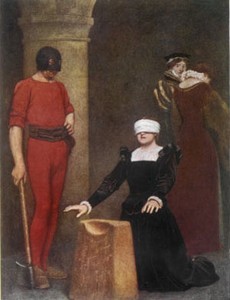
The Babington Plot proved Mary's guilt and Parliament pressured Elizabeth to order her execution. This was carried out in 1587.
What was important about Mary Queen of Scots arrival in England?
Mary's arrival in England led to a series of plots and rebellions. This was because she was Catholic and the heir to the throne. The situation was even more dangerous because of the Papal Bull which urged Catholics to rise up against Elizabeth.
What was important about Mary Queen of Scots execution?
Mary's execution reduced the Catholic threat at home. The new heir to the throne was Protestant and so Catholics had nothing to gain by killing Elizabeth. There were no more Catholic plots in Elizabeth's reign.
However, the execution of Mary increased the threat from abroad. It angered France and Spain and it was one cause of the Spanish Armada the next year in 1588.
Trouble Magnet
Mary Queen of Scots was Elizabeth's cousin. She was overthrown as Queen in Scotland and fled to England in 1568. Her presence in England was a huge problem for Elizabeth because she attracted trouble. Mary was Catholic and heir to the throne so she became the focus of a series of plots to kill Elizabeth and replace her with Mary - for example the Northern Rebellion and the Ridolfi Plot. Mary was kept under house arrest.
Trial and Execution
Although Mary was involved in earlier plots, Elizabeth did not want to execute her because:
- There wasn't enough evidence that she supported the plots.
- It would anger France and Spain.
- She was her cousin and a monarch appointed by Divine Right.
The Babington Plot proved Mary's guilt and Parliament pressured Elizabeth to order her execution. She reluctantly signed the death warrant but the execution was carried out without her knowledge in 1587. Elizabeth was furious.
What was important about Mary Queen of Scots arrival in England?
Mary's arrival in England led to a series of Catholic plots and rebellions. This was because she was Catholic and the heir to the throne. Therefore many Catholics saw an opportunity to make England Catholic again. The situation was even more dangerous because of the Papal Bull in 1570 which urged Catholics to rise up against Elizabeth.
What was important about Mary Queen of Scots execution?
Mary's execution reduced the Catholic threat at home. The new heir to the throne, James Stuart (Mary's son), was Protestant and so Catholics had nothing to gain by killing Elizabeth. There were no more Catholic plots in Elizabeth's reign.
However, the execution of Mary increased the threat from abroad. It angered France (Mary had been Queen of France) and Spain and it was one cause of the Spanish Armada the next year in 1588. England was at war with Spain for most of the remainder of Elizabeth's reign.
Trouble Magnet
Mary Queen of Scots was Elizabeth's cousin. She was overthrown as Queen in Scotland and fled to England in 1568. Her presence in England was a huge problem for Elizabeth because she attracted trouble. Mary was Catholic and heir to the throne so she became the focus of a series of plots to kill Elizabeth and replace her with Mary - for example the Northern Rebellion and the Ridolfi Plot. Mary was kept under house arrest in Derbyshire under the supervision of the Earl of Shrewsbury.
Trial and Execution
Although Mary was involved in earlier plots, Elizabeth did not want to execute her because:
- There wasn't enough evidence that she supported the plots.
- It would anger France and Spain.
- It would undermine the principle of Divine Right and weaken the institution of monarchy.
The Babington Plot proved Mary's guilt and, following her trial, Parliament pressured Elizabeth to order her execution. She reluctantly signed the death warrant but the execution was then carried out at Fotheringay Castle on the orders of the Privy Council without her knowledge in 1587. Elizabeth was furious and imprisoned her secretary. Her anger may have been exaggerated so that she could deny her involvement in the execution of a fellow sovereign.
What was important about Mary Queen of Scots arrival in England?
Mary's arrival in England led to a series of Catholic plots and rebellions. This was because she was Catholic and the heir to the throne. She therefore became a figurehead for many Catholics who saw an opportunity to make England Catholic again. The situation was even more dangerous because of the Papal Bull in 1570 which urged Catholics to rise up against Elizabeth.
What was important about Mary Queen of Scots execution?
Mary's execution reduced the Catholic threat at home. The new heir to the throne, James Stuart (Mary's son), was Protestant and so Catholics had nothing to gain by killing Elizabeth. There were no more Catholic plots in Elizabeth's reign. However the series of plots ended Elizabeth's tolerance towards Catholics and increased the severity of laws against them.
The execution of Mary increased the threat from abroad. It angered France (Mary had been Queen of France) and Spain and it was one cause of the Spanish Armada the next year in 1588. England was at war with Spain for most of the remainder of Elizabeth's reign.