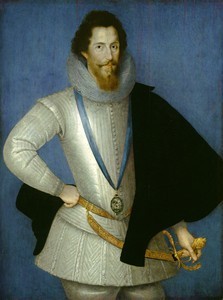
Robert Devereux, Earl of Essex, was a favourite of Elizabeth who later rebelled in 1601. The rebelllion was quickly crushed and he was executed.
Causes of the Rebellion:
- Elizabeth promoted Essex's rival, Robert Cecil.
- Essex argued with Elizabeth during a meeting about Ireland (she hit him).
- Essex was sent to Ireland to put down a rebellion but he failed and instead made peace with the rebel leader.
- Essex lost his job and wealth.
Having lost his status and his income, Essex desperately kidnapped four Privy Councillors in 1601 and tried to start a rebellion. However, Robert Cecil (Elizabeth's chief minister) sent in soldiers. Most of Essex's supporters surrendered and the rebellion was quickly defeated. Essex was captured and executed.
Significance of the rebellion:
- It showed the divisions within the Privy Council.
- It suggested that Elizabeth didn't have as tight control over important nobles.
- However - it was easily crushed (showing the power of Robert Cecil).
Robert Devereux, Earl of Essex, was a favourite of Elizabeth who later rebelled in 1601. The rebelllion was quickly crushed and he was executed.
Essex was favoured by the Queen from 1587, making him Master of the Horse and giving him a monopoly on sweet wine which made him rich. She made him a Privy Councillor in 1593. He was successful militarily, capturing Cadiz in 1596 which made him a national hero.
Causes of the Rebellion:
- Arrogance: Essex encouraged his own popularity following Cadiz. Some claimed he was more popular than the Queen.
- Rivalry: Elizabeth promoted Essex's rival, Robert Cecil, above him.
- Ireland: In 1598, Essex argued with Elizabeth during a Privy Council meeting about Ireland (he half-drew his sword on her and she hit him). He was sent to Ireland to put down a rebellion but he failed to win any military victories and instead he made peace with the rebel leader.
- Finally, Essex disrespected the Queen by storming in to her private chamber before she was wigged or fully clothed.
- Humiliation: As a result, Elizabeth stripped Essex of his jobs and his income.
Essex was ruined. In desperation, he kidnapped four Privy Councillors in 1601 and tried to rouse the people of London to support a rebellion. However, Robert Cecil (Elizabeth's chief minister) sent in soldiers. Most of Essex's supporters surrendered and the rebellion was defeated just a few hours after it had begun. Essex was captured and executed.
Significance of the rebellion:
- It showed the divisions within the Privy Council and how a previously loyal subject could pose a significant threat.
- It suggested that Elizabeth didn't have as tight control over important nobles.
- However - it was easily crushed (showing the power of Robert Cecil).
- And it showed how quickly a favourite could fall from favour.
Robert Devereux, Earl of Essex, was a favourite of Elizabeth who later rebelled in 1601. The rebelllion was quickly crushed and he was executed.
Essex was favoured by the Queen from 1587, making him Master of the Horse and giving him a monopoly on sweet wine which made him rich. She made him a Privy Councillor in 1593. He was successful militarily, looting Cadiz in 1596 and preventing a new Armada. This made him a national hero. Essex was also very well-connected. His step-father had been Robert Dudley (Leicester) and his father-in-law was Francis Walsingham.
Causes of the Rebellion:
- Arrogance: Essex encouraged his own popularity following Cadiz. Some claimed he was more popular than the Queen.
- Rivalry: following the deaths of her trusted advisers William Cecil, Robert Dudley and Francis Walsingham, there was great rivalry between younger advisers. Elizabeth promoted Essex's rival, Robert Cecil, above him.
- Ireland: In 1598, Essex disrespected Elizabeth during a Privy Council meeting about Ireland (he half-drew his sword on her and she hit him). He was sent to Ireland, as Lord Lieutenant, with a huge force of 16,000 to put down a rebellion in the Nine Years War but he failed to win any military victories and instead he made peace with the rebel leader. He also annoyed Elizabeth by knighting huge numbers of his supporters without her permission - half the knights in England owed their title to him.
- Finally, Essex disrespected the Queen by storming in to her private chamber before she was wigged or fully clothed.
- Humiliation: As a result, Elizabeth stripped Essex of his jobs and his income.
Essex was ruined. In desperation, he kidnapped four Privy Councillors in 1601 and tried to rouse the people of London to support a rebellion. However, Robert Cecil (Elizabeth's chief minister) sent in soldiers. Most of Essex's 300 supporters surrendered and the rebellion was defeated about 12 hours after it had begun. Essex was captured and executed.
Significance of the rebellion:
- It showed the divisions within the Privy Council and how a previously loyal subject could pose a significant threat.
- Whilst it showed that Elizabeth didn't enjoy complete support, it was more easily crushed than the Northern Rebellion, showing relative strength.
- It showed the rising power of Robert Cecil.
- And it showed how quickly a favourite could fall from favour.