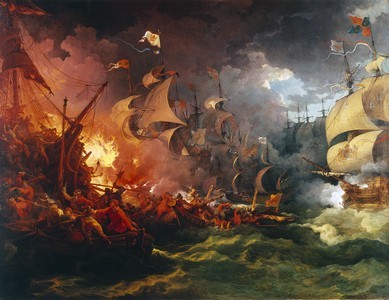
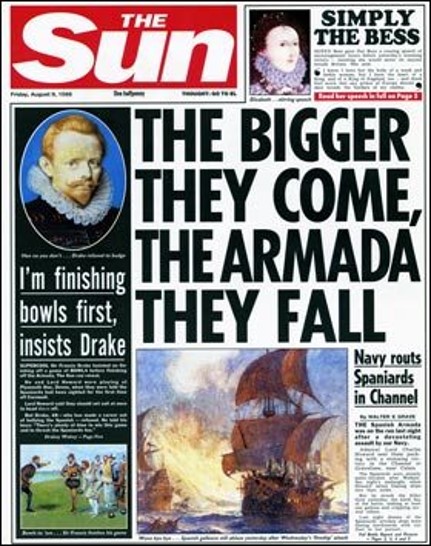
The Spanish Armada was completely defeated in 1588. At first, the English failed to break apart the strong crescent formation of the Spanish ships. However, a breakthrough came when Drake sent fireships into the Spanish fleet at Calais. This split up their tight formation and allowed the English ships to attack them at the Battle of Gravelines. The Spanish were then blown into gales in the North Sea and many ships were wrecked on the coast of Scotland. Only about 60 ships returned to Spain.
Why the Spanish Armada L.O.S.T.:
- Leaders: Sir Francis Drake and Lord Howard were more experienced than the Spanish leader.
- Organisation: the Spanish were more prepared for fighting on land once they had invaded, rather than at sea. Many of their cannons were unable to fire.
- Storms: the wind made it impossible for the Spanish ships to meet up with reinforcements in the Netherlands. Gales then wrecked large numbers of Spanish ships as they tried to sail home.
- Tactics: the English ships were faster and more nimble. Their cannons were more accurate and had a longer range.
Signficance of the Defeat of the Armada:
- England remained independent and Protestant.
- It was a huge propaganda victory for Elizabeth. She claimed that the Armada had been defeated by a 'Protestant Wind', showing that God was on their side.
- The English navy further developed their tactics helping England to become a great naval power.
The Spanish Armada was completely defeated in 1588. At first, the English failed to break apart the strong crescent formation of the Spanish ships. However, a breakthrough came when Drake sent fireships into the Spanish fleet at Calais. This split up their tight formation and allowed the English ships to attack them at the Battle of Gravelines. Five Spanish ships were sunk at Gravelines and many more were damaged - no English ships were lost. The wind direction then made it impossible for the Spanish ships to meet up with reinforcements in the Netherlands. Instead, they were blown into gales in the North Sea and many ships were wrecked on the coasts of Scotland and Ireland. Only 60 ships returned to Spain and around 20,000 Spanish lost their lives.
Why the Spanish Armada L.O.S.T.:
- Leaders: Sir Francis Drake and Lord Howard of Effingham were more experienced than the Spanish leader, the Duke of Medina Sidonia.
- Organisation: the Spanish were more prepared for fighting on land once they had invaded, rather than at sea. Many of their cannons either didn't have cannon balls or lacked space to reload them. They failed to collect the Duke of Parma's army that was waiting to help them in the Spanish Netherlands.
- Storms: the wind made it impossible for the Spanish ships to meet up with reinforcements in the Netherlands. Gales then wrecked large numbers of Spanish ships as they attempted to sail home around the north coast of Scotland.
- Tactics: the English ships were faster and more nimble. Their cannons were more accurate and had a longer range. Broadside attacks were able to damage the Spanish ships from a safe distance. Fireships were effective in breaking up the Armada's crescent formation.
Signficance of the Defeat of the Armada:
- England remained independent and Protestant.
- It was a huge propaganda victory for Elizabeth. She claimed that the Armada had been defeated by a 'Protestant Wind', showing that God was on their side. This boosted morale at home and furthered the myth of Gloriana.
- The English navy further developed their tactics helping England to become a great naval power.
- England continued to be at war with Spain until 1604.
The Spanish Armada was completely defeated in 1588. At first, the English failed to break apart the strong crescent formation of the 130 Spanish ships. However, a breakthrough came when Drake sent fireships into the Spanish fleet at Calais. This split up their tight formation and allowed the English ships to attack them at the Battle of Gravelines where five ships were sunk and many more were damaged - no English ships were lost. The wind direction then made it impossible for the Spanish ships to meet up with reinforcements in the Netherlands. Instead, they were blown into gales in the North Sea and many ships were wrecked on the coasts of Scotland and Ireland. Only 60 ships returned to Spain and around 20,000 Spanish lost their lives.
Why the Spanish Armada L.O.S.T.:
- Leaders: Sir Francis Drake and Lord Howard of Effingham were more experienced sailors than the Spanish leader, the Duke of Medina Sidonia.
- Organisation: the Spanish were more prepared for fighting on land once they had invaded, rather than at sea. Many of their cannons either didn't have cannon balls or lacked space to reload them. They failed to collect the Duke of Parma's 30,000 strong army that was waiting to help them in the Spanish Netherlands. Drake had successfully destroyed 30 Spanish ships and many of their supplies at Cadiz in 1587 - the Singeing of the King of Spain's beard.
- Storms: the wind made it impossible for the Spanish ships to meet up with reinforcements in the Netherlands. Gales then wrecked large numbers of Spanish ships as they attempted to sail home around the north coast of Scotland.
- Tactics: the English ships were faster and more nimble thanks to the naval reforms of Hawkins. Their cannons, known as culverins, were more accurate and had a longer range. Broadside attacks were able to damage the Spanish ships from a safe distance. Fireships were effective in breaking up the Armada's crescent formation.
Signficance of the Defeat of the Armada:
- England remained independent and Protestant.
- It was a huge propaganda victory for Elizabeth. She claimed that the Armada had been defeated by a 'Protestant Wind', showing that God was on their side. This boosted morale at home and furthered the myth of Gloriana.
- The English navy further developed their tactics helping England to become a great naval power.
- England continued to be at war with Spain until 1604. Spain launched further doomed Armadas in 1596 and 1597. Elizabeth continued to support Dutch rebels in the Netherlands and Philip aided rebellion against Elizabeth in Ireland.