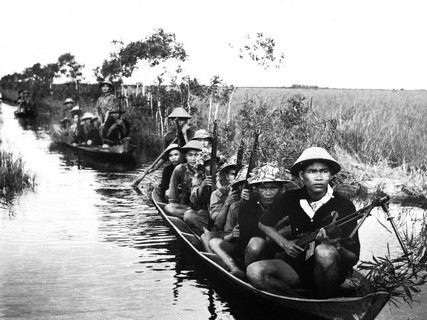
The VC favoured guerrilla tactics. This means hiding and using surprise attacks such as ambushes and booby traps. This was because they weren’t strong enough to match the US’s technology or heavy weaponry in open warfare. Traps included the punji trap, tin-can trap and bouncing betty. These were designed to injure US soldiers, slowing down a unit and sapping morale.
The VC made great use of tunnels. Thousands of fighters hid in hundreds of miles of tunnels which enabled them to hide from US bombs and to ambush US soldiers easily. Some tunnels even extended under US airbases.
The VC also worked hard to win over the hearts and minds of the South Vietnamese people by helping them in the fields. This meant that there were people willing to help them by hiding them, making traps or transporting weapons and supplies along the Ho Chi Minh trail.
The VC favoured guerrilla tactics. This means hiding and using surprise attacks such as ambushes and booby traps. This was because they weren’t strong enough to match the US’s technology or heavy weaponry in open warfare. Traps included the punji trap, tin-can trap and bouncing betty. These were designed to injure US soldiers, slowing down a unit and sapping morale.
The VC made great use of tunnels. Thousands of fighters hid in hundreds of miles of tunnels which enabled them to hide from US bombs and to ambush US soldiers easily. Some tunnels even extended under US airbases.
The VC also worked hard to win over the hearts and minds of the South Vietnamese people by helping them in the fields. This meant that there were people willing to help them by hiding them, making traps or transporting weapons and supplies along the Ho Chi Minh trail.
In 1968, the VC and North Vietnamese Army tried open warfare at the Tet Offensive, believing that one final push would be enough to drive the Americans out.
The VC favoured guerrilla tactics. This means hiding and using surprise attacks such as ambushes and booby traps. This was because they weren’t strong enough to match the US’s technology or heavy weaponry in open warfare. Traps included the punji trap, tin-can trap and bouncing betty. These were designed to injure US soldiers, slowing down a unit and sapping morale. The 'Hard Luck Battalion' suffered 600 casualties in 6 months without even seeing the enemy.
The VC made great use of tunnels, for example at Cu Chi. Thousands of fighters hid in hundreds of miles of tunnels which enabled them to hide from US bombs and to ambush US soldiers easily. Some tunnels even extended under US airbases.
The VC also worked hard to win over the hearts and minds of the South Vietnamese people by helping them in the fields. This meant that there were people willing to help them by hiding them, making traps or transporting weapons and supplies along the Ho Chi Minh trail.
The VC and North Vietnamese Army (NVA) had anti-aircraft guns and the NVA had Chinese and Soviet fighter jets. The VC made great use of unexploded American ordnance, recycling this into their own weapons and bombs.
In 1968, the VC and NVA tried open warfare at the Tet Offensive, believing that one final push would be enough to drive the Americans out.