When Kennedy was killed in 1963, the new president, Lyndon B Johnson (LBJ) decided that the current policy of supporting the
South Vietnamese government wasn’t working. He decided to send in US troops to fight the communists but he needed to gain public support before doing this. His opportunity came when a US warship was apparently attacked in the Gulf of Tonkin. This probably didn’t happen but it was enough
to persuade Congress (the US Parliament) to pass the Gulf of Tonkin Resolution authorising the president to go to war.
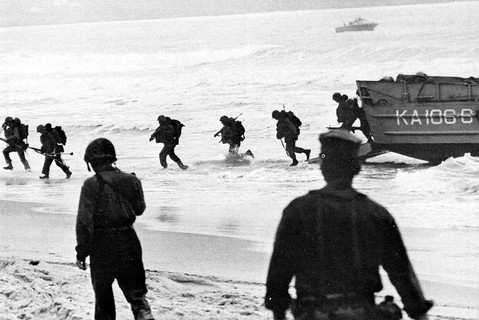
Johnson then began targeted bombing of North Vietnam (Operation Rolling Thunder) in February 1965 and sent in ground forces in March 1965. At first there were only 3 500 but by the end of 1965 there were nearly 200 000 US soldiers in South Vietnam.
In 1963 the US did nothing to stop the assassination of President Diem and the security situation in South Vietnam deteriorated further. When Kennedy was himself killed in 1963, the new president, Lyndon B Johnson (LBJ) decided that the current policy of supporting the South Vietnamese government wasn’t working. He decided to send in US troops to fight the communists but he needed to gain public support before doing this. His opportunity came when a US warship was apparently attacked in the Gulf of Tonkin Incident. In August 1964 a US warship, the USS Maddox, was allegedly attacked by the North Vietnamese. This probably didn’t happen but it was enough to persuade Congress (the US Parliament) to pass the Gulf of Tonkin Resolution authorising the president to go to war.
Johnson began Operation Rolling Thunder (targeted bombing of North Vietnam) in February 1965. An attack on a US airbase at Pleiku in March
killed 8 soldiers and injured 100 others. This led to Johnson sending in the US Marines. At first there were only 3 500 but by the end of
1965 there were nearly 200 000 US soldiers in South Vietnam.
In 1963 the US did nothing to stop the assassination of President Diem and the security situation in South Vietnam deteriorated further. When Kennedy was himself killed in 1963, the new president, Lyndon B Johnson (LBJ) decided that the current policy of supporting the South Vietnamese government wasn’t working. He decided to send in US troops to fight the communists but he needed to gain public support before doing this. His opportunity came when a US warship was apparently attacked in the Gulf of Tonkin Incident. In August 1964 a US warship, the USS Maddox, was allegedly attacked by the North Vietnamese. This probably didn’t happen but it was enough to persuade Congress (the US Parliament) to pass the Gulf of Tonkin Resolution authorising the president to go to war. Only 2 members of Congress voted against it.
Johnson began Operation Rolling Thunder (targeted bombing of North Vietnam) in February 1965. An attack on a US airbase at Pleiku in March
killed 8 soldiers and injured 100 others. This led to Johnson sending in the US Marines. At first there were only 3 500 but by the end of
1965 there were nearly 200 000 US soldiers in South Vietnam, rising to more than 500 000 by 1968.