Public Opinion in the US was gradually shifting against the war in the late 1960s. However, several dramatic events quickly turned public opinion further against the war.
The Tet Offensive in January 1968 was probably the single biggest turning point in public opinion. Before Tet, the majority of the US public believed that the war was essential. During Tet, the sight of VC soldiers in the US Embassy led to more and more people believing that the war was at best unwinnable. There was also increased suspicion of the government as they had claimed that the war was going well.
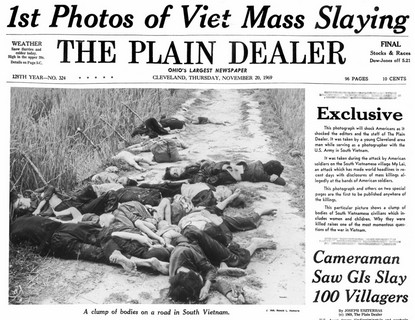
The My Lai Massacre in March 1968 sickened most Americans. About 500 Vietnamese (mostly women and children) were killed in cold blood. The US government covered this up and it was only revealed by the media 18 months later. Many blamed the government for turning young American boys into murderers. The fact that it had been covered up made others suspicious that other atrocities may have been concealed. However, a small minority supported the GIs, and a song released in support of Lieutenant Calley who led the attack sold 250 000 copies.
At the Kent State Massacre of May 1970, National Guardsmen killed four US students and injured nine others. The Guardsmen panicked when they ran out of tear gas and the protestors advanced towards them. The government was supposedly fighting the war in Vietnam in the name of liberty but now it appeared to many that the students had been killed for protesting.
Continuing Support
Despite the protests, the US remained divided. By the early 1970s up to 40% of Americans still believed that the war was worth fighting to stop the spread of communism.
The Tet Offensive in January 1968 was probably the single biggest turning point in public opinion. Before Tet, the majority of the US public believed that the war was essential. After Tet, more and more people believed that the war was at best unwinnable.
The My Lai Massacre in March 1968 sickened most Americans. About 500 Vietnamese (mostly women and children) were killed in cold blood. The US government covered this up and it was only revealed by the media 18 months later.
At the Kent State Massacre of May 1970, National Guardsmen killed four US students and injured nine others. The Guardsmen panicked when they ran out of tear gas and the protestors advanced towards them. The government was supposedly fighting the war in Vietnam in the name of freedom but now it appeared to many that the students had been killed for protesting.
Continuing Support
Despite the protests, the US remained divided. By the early 1970s up to 40% of Americans still believed that the war was worth fighting to stop the spread of communism.
Public Opinion in the US was gradually shifting against the war in the late 1960s. However, several dramatic events quickly turned public opinion further against the war.
The Tet Offensive in January 1968 was probably the single biggest turning point in public opinion. Before Tet, the majority of the US public believed that the war was essential. After Tet, more and more people believed that the war was at best unwinnable. There was also increased suspicion of the government as they had claimed that the war was going well.
The My Lai Massacre in March 1968 sickened most Americans. About 500 Vietnamese (mostly women and children) were killed in cold blood. The US government covered this up and it was only revealed by the media 18 months later. Many blamed the government for turning young American boys into murderers. The fact that it had been covered up made others suspicious that other atrocities may have been concealed.
At the Kent State Massacre of May 1970, National Guardsmen killed four US students and injured nine others. The Guardsmen panicked when they ran out of tear gas and the protestors advanced towards them. The government was supposedly fighting the war in Vietnam in the name of liberty but now it appeared to many that the students had been killed for protesting.
Continuing Support
Despite the protests, the US remained divided. By the early 1970s up to 40% of Americans still believed that the war was worth fighting to stop the spread of communism.
Public Opinion in the US was gradually shifting against the war in the late 1960s. However, several dramatic events quickly turned public opinion further against the war.
The Tet Offensive in January 1968 was probably the single biggest turning point in public opinion. Before Tet, the majority of the US public believed that the war was essential. During Tet, the sight of VC soldiers in the US Embassy led to more and more people believing that the war was at best unwinnable. There was also increased suspicion of the government as they had claimed that the war was going well.
The My Lai Massacre in March 1968 sickened most Americans. About 500 Vietnamese (mostly women and children) were killed in cold blood. The US government covered this up and it was only revealed by the media 18 months later. Many blamed the government for turning young American boys into murderers. The fact that it had been covered up made others suspicious that other atrocities may have been concealed. However, a small minority supported the GIs, and a song released in support of Lieutenant Calley who led the attack sold 250 000 copies.
At the Kent State Massacre of May 1970, National Guardsmen killed four US students and injured nine others. The Guardsmen panicked when they ran out of tear gas and the protestors advanced towards them. The government was supposedly fighting the war in Vietnam in the name of liberty but now it appeared to many that the students had been killed for protesting.
Continuing Support
Despite the protests, the US remained divided. By the early 1970s up to 40% of Americans still believed that the war was worth fighting to stop the spread of communism.