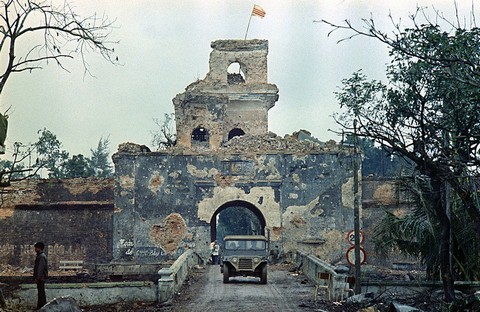
The Tet Offensive was a series of surprise attacks by the North Vietnamese Army (NVA) and VC in January 1968. Most attacks were quickly defeated in a few days although the VC held the old capital of Hue for over 3 weeks.
Military Impact
Militarily the Tet Offensive was a success for the Americans. The US restored control to every base and town attached and lost only 2 000 troops compared with at least 10 000 losses for the VC which took them years to recover from.
Political Impact
The political consequences of Tet were disastrous for the US. The media back at home presented Tet as a military defeat. This was a turning point for many people in the US who now felt that the war was unwinnable. Because of the public reaction, President Johnson refused to send 200 000 extra troops. Johnson also decided not to stand for re-election as US President later that year. This led to a new president and a change of tactics in Vietnam.
In January 1968 the North Vietnamese Army (NVA) and VC launched surprise attacks against over 100 US bases and cities. This was a change of tactics for the communists,using open warfare in an attempt finally to drive the US out of the country. Most attacks were quickly repulsed in a few days although the VC held the old capital of Hue for over 3 weeks.
Military Impact
Militarily the Tet Offensive was a success for the Americans. The US restored control to every base and town attached and lost only 2 000 troops compared with at least 10 000 losses for the VC which took them years to recover from.
Political Impact
The political consequences of Tet were disastrous for the US. The media back at home presented Tet as a military defeat. Walter Cronkite, a famous news presenter, was heard to exclaim, “I thought we were winning this war.” This was a turning point for many people in the US who had previously believed the government’s claims that the war was being won. They felt that the government had misled them about the war and that it was now at best unwinnable. Because of the public reaction, Johnson refused General Westmoreland’s request for 200 000 additional troops. Johnson also decided not to stand for re-election as US President later that year, partly because of the perceived failure of Tet. This led to a new president and a change of tactics in Vietnam.
In January 1968 the North Vietnamese Army (NVA) and VC launched surprise attacks against over 100 US bases and cities. This was a change of tactics for the communists,using open warfare in an attempt finally to drive the US out of the country. Most attacks were quickly repulsed in a few days although the VC held the old capital of Hue for over 3 weeks.
Military Impact
Militarily the Tet Offensive was a success for the Americans. The US restored control to every base and town attached and lost only 2 000 troops compared with at least 10 000 losses for the VC which took them years to recover from. Following Tet the US focused more on defending the towns and carried out fewer search and destroy missions.
Political Impact
The political consequences of Tet were disastrous for the US. The media back at home presented Tet as a military defeat. Walter Cronkite, a famous news presenter, was heard to exclaim, “I thought we were winning this war.” This was reinforced by the sight of VC soldiers fighting in the grounds of the US Embassy in Saigon (although they never captured it). Tet was probably the most significant turning point in public opinion in the US. Before Tet the majority had believed the government’s claims that the war was being won. After Tet, many felt that the government had misled them about the war and that it was now at best unwinnable. Because of the public reaction, Johnson refused General Westmoreland’s request for 200 000 additional troops. Johnson also decided not to stand for re-election as US President later that year, partly because of the perceived failure of Tet. This led to a new president and a change of tactics in Vietnam.