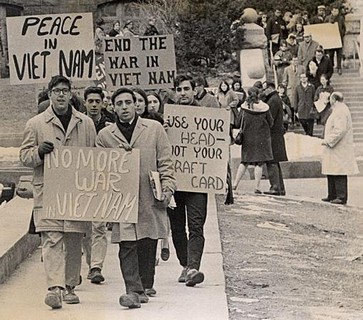
At the start of war about 80% of Americans supported US involvement in Vietnam. This was largely because they believed the government’s claim that it was essential to stop the spread of communism in SE Asia.
The Draft
Protests in the US against the draft (conscription) began in 1965. Many young people burned their draft papers and Muhammad Ali was jailed for refusing to fight.
Casualties
Many Americans turned against the war as more and more US soldiers were killed. About 58 000 US troops were killed in total.
The Media
At the start of the war the media helped to spread the US government’s message about the importance of the war. However as the war went on, the coverage became increasingly negative. This was the ‘first TV war’ with bulletins transmitted to people’s homes every night. People saw the horrors of war and this made more people turn away from supporting it.
The media also played a central role in uncovering atrocities, for example at My Lai.
Veterans
Veterans (soldiers who had served in Vietnam) were divided in their view of the Vietnam conflict. Some still supported it but others saw it as a senseless waste of human life. About 300 000 took part in the Veterans’ March in Washington in 1971 and some threw away their medals. These veterans had a significant impact on public opinion because they couldn’t simply be dismissed as hippies or draft-dodgers.
At the start of war about 80% of Americans supported US involvement in Vietnam. This was largely because they believed successive governments’ claims that it was essential to stop the spread of communism in SE Asia. They also thought it would be successful like the Korean War.
The Draft
Protests in the US against the draft (conscription) began in 1965. Many young people burned their draft papers. Altogether 250 000 avoided the draft and 34 000 were wanted by police. Muhammad Ali was the most famous protestor – he was jailed for refusing to fight.
Casualties
As casualties mounted during the war, increasing numbers turned against the war. US fatalities peaked at nearly 17 000 in 1968 with over 500 in a single week in May. This made many question whether the human cost of the war was worthwhile. About 58 000 US troops were killed in total.
The Media
At the start of the war the media helped to spread the US government’s message about the importance of the war. However as the war went on, the coverage became increasingly negative. This was the ‘first TV war’ with bulletins transmitted to people’s homes every night. People saw the horrors of war and this made more people turn away from supporting it.
The media also played a central role in uncovering atrocities, for example at My Lai, and as the government had concealed this, many stopped trusting the government.
Veterans
Veterans (soldiers who had served in Vietnam) were divided in their view of the Vietnam conflict. Some felt that it was important to continue their fight and did not want their colleagues who had been killed to have died in vain. However many saw the war as senseless and protested against it. 300 000 joined the Veterans’ March in Washington in 1971 and some threw away their medals. These veterans had a significant impact on public opinion because they couldn’t simply be dismissed as hippies or draft-dodgers.
The Social Context
US society was undergoing great change during the 1960s which impacted on the public reaction to the war in Vietnam. Young people started to challenge authority and Hippies argued for peace. Both groups actively opposed the war. The Civil Rights movement fought for equality for African Americans and activists argued that the draft was racist – 28% of front line combat soldiers were black, more than double the proportion in US society (13%). The war also cost $169 billion which meant that money was not available to help the poorest parts of society which were often African-American.
At the start of war about 80% of Americans supported US involvement in Vietnam. This was largely because they believed successive governments’ claims that it was essential to stop the spread of communism in SE Asia. They also thought it would be successful like the Korean War.
The Draft
Protests in the US against the draft (conscription) began in 1965. Many young people burned their draft papers. Altogether 250 000 avoided the draft and 34 000 were wanted by police. Muhammad Ali was the most famous protestor – he was jailed for refusing to fight.
Casualties
As casualties mounted during the war, increasing numbers turned against the war. US fatalities peaked at nearly 17 000 in 1968 with over 500 in a single week in May. This made many question whether the human cost of the war was worthwhile. About 58 000 US troops were killed in total.
The Media
At the start of the war the media helped to spread the US government’s message about the importance of the war. However as the war went on, the coverage became increasingly negative. This was the ‘first TV war’ with bulletins transmitted to people’s homes every night. People saw the horrors of war and this made more people turn away from supporting it.
The media also played a central role in uncovering atrocities, for example at My Lai, and as the government had concealed this, many stopped trusting the government.
Veterans
Veterans (soldiers who had served in Vietnam) were divided in their view of the Vietnam conflict. Some felt that it was important to continue their fight and did not want their colleagues who had been killed to have died in vain. However many saw the war as senseless and protested against it. 300 000 joined the Veterans’ March in Washington in 1971 and some threw away their medals. These veterans had a significant impact on public opinion because they couldn’t simply be dismissed as hippies or draft-dodgers.
The Social Context
US society was undergoing great change during the 1960s which impacted on the public reaction to the war in Vietnam. Young people started to challenge authority and Hippies argued for peace. Both groups actively opposed the war. The Civil Rights movement fought for equality for African Americans and activists argued that the draft was racist – 28% of front line combat soldiers were black, more than double the proportion in US society (13%). The war also cost $169 billion which meant that money was not available to help the poorest parts of society which were often African-American.