Surgery improved during WWI in the following ways:
Blood Transfusions - Blood Groups had been discovered in 1901 by Karl Landsteiner and this enabled successful blood transfusions. During WWI scientists developed ways to store blood so it could be used in the trenches. Rous and Turner used citrate glucose solution and the first blood depot opened at Cambrai in 1917.
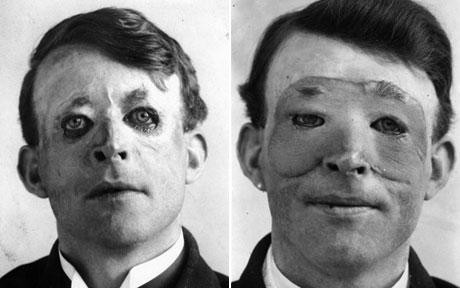
Plastic Surgery - Harold Gillies opened the Queen's hospital at Sidcup with over 1 000 beds. He pioneered new techniques,such as the tube pedicle, to perform ambitious skin grafts and facial reconstruction.
New ways of fighting infections - e.g. using saline solution.
Mobile X-Ray machines were developed by Marie Curie
Surgery improved during WWI in the following ways:
Blood Transfusions - Blood Groups had been discovered in 1901 which allowed blood transfusions to work. During WWI scientists developed ways to store blood so it could be used in the trenches.
Plastic Surgery - Harold Gillies opened a new hospital to treat injuries and he developed new techniques for skin grafts.
New ways of fighting infections - e.g. using saline solution
Mobile X-Ray machines were developed by Marie Curie
Surgery improved during WWI in the following ways:
Blood Transfusions - Blood Groups had been discovered in 1901 by Karl Landsteiner and this enabled successful blood transfusions. During WWI scientists developed ways to store blood so it could be used in the trenches. Rous and Turner used citrate glucose solution and the first blood depot opened at Cambrai in 1917.
Plastic Surgery - Harold Gillies opened a new hospital at Sidcup to treat injuries and he developed new techniques for skin grafts.
New ways of fighting infections - e.g. using saline solution.
Mobile X-Ray machines were developed by Marie Curie
Surgery improved during WWI in the following ways:
Blood Transfusions - Blood Groups had been discovered in 1901 by Karl Landsteiner and this enabled successful blood transfusions. During WWI scientists developed ways to store blood so it could be used in the trenches. Rous and Turner used citrate glucose solution and the first blood depot opened at Cambrai in 1917.
Plastic Surgery - Harold Gillies opened the Queen's hospital at Sidcup with over 1 000 beds. He pioneered new techniques,such as the tube pedicle, to perform ambitious skin grafts and facial reconstruction.
New ways of fighting infections - e.g. using saline solution.
Mobile X-Ray machines were developed by Marie Curie