

1450-1750 |
Middle Ages |
The Renaissance |
Industrial Revolution |
Twentieth Century |
Renaissance Treatments
There was mostly continuity from the Middle Ages and most treatments were ineffective. Treatments in the Renaissance continued to be based on herbal remedies and trying to balance the humours. Leeches or bleeding cups were used to remove excess blood, enemas were used to clear the bowels and emetics to induce vomiting. Herbal remedies were developed as international trade and exploration brought new ideas and new plants to Britain. Tobacco, brought to England by Sir John Hawkins in 1564, was thought to be a miracle cure and was ironically used to treat cancer and respiratory problems. Mercury was suggested by the doctor Paracelsus as a treatment for syphilis, an STI that became widespread during the Renaissance. Some ideas were more sensible: Sydenham recommended using iron to treat anaemia. He also argued that it was usually better for doctors to do nothing and let nature take its course. However, he still believed in bleeding and miasma theory.
The Doctrine of Signatures was the belief that God had created a cure in nature for every ailment and it would resemble the part of the body affected, for example the flower Euphrasia (eye-bright) should be used for treating eye problems. This idea was promoted by the English Botanist William Cole.
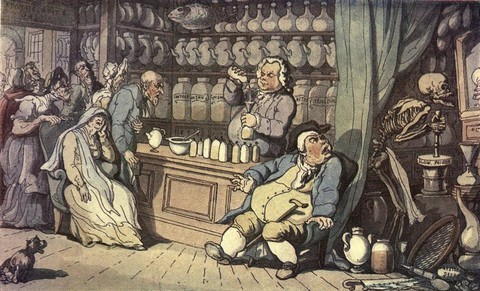
The rich were treated by Trained Physicians whilst others used apothecaries or wise women. The poor mostly had to manage with home remedies. There was a growth in quack doctors - people with no medical training selling supposed cures.