Treatments in the Middle Ages were very simple. Herbal remedies were common and sold in markets and fairs. Bloodletting was used to balance
the humours, either by opening a vein or applying leeches. Herbs were used to induce vomiting or to clear the bowels. Prayer, pilgrimage and
charms were also tried, e.g. praying to St Roch to cure toothache or plague.
Who treated the sick?
Trained Physicians
trained at university, so were men only. Used urine charts and astrology.
Apothecaries cheaper than a trained physician.
They made up medicines and had some training.
Barber-Surgeons performed basic surgery as well as cutting your
hair. They would perform bloodletting, lancing boils and dentistry. They might also perform surgery like cutting out bladder stones or
even amputating limbs but the death rate was very high.
Wise women had great knowledge of traditional herbal
remedies; they could also deliver babies. Might use charms and spells too. Often she was the lady of the manor and would have her own
herb garden.
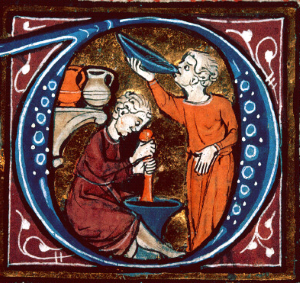
Mixing herbal remedies.
Treatments in the Middle Ages were very simple. Bleeding or purging was used to balance the humours and herbal remedies were common. Prayer and pilgrimage were also tried.
Who treated the sick?
Trained Physicians trained at university, so were men only. Used urine charts and astrology.
Apothecaries were cheaper than a trained physician. They made up medicines and had some training.
Barber-Surgeons performed basic surgery as well as cutting your hair. They would perform bloodletting, lancing boils and dentistry. They might also perform surgery like cutting out bladder stones or even amputating limbs but the death rate was very high.
Wise women had great knowledge of traditional herbal remedies; they could also deliver babies.
Hospitals in the Middle Ages were basic and offered care (food and lodging) rather than cure. They looked after the poor and the elderly and were given prayer rather than treatments. Hospitals were controlled by the Church and often run by monks or nuns. They would not admit those with infectious diseases although there were a few specialist hospitals for diseases such as leprosy.
Treatments in the Middle Ages were very simple. Bleeding or purging was used to balance the humours and herbal remedies were common. Prayer and pilgrimage were also tried.
Who treated the sick?
Trained Physicians trained at university, so were men only. Used urine charts and astrology.
Apothecaries were cheaper than a trained physician. They made up medicines and had some training.
Barber-Surgeons performed basic surgery as well as cutting your hair. They would perform bloodletting, lancing boils and dentistry. They might also perform surgery like cutting out bladder stones or even amputating limbs but the death rate was very high.
Wise women had great knowledge of traditional herbal remedies; they could also deliver babies. They might use charms and spells too. Often she was the lady of the manor and would have her own herb garden.
Treatments in the Middle Ages were very simple. Herbal remedies were common and sold in markets and fairs. Bloodletting was used to balance the humours, either by opening a vein or applying leeches. Herbs were used to induce vomiting or to clear the bowels. Prayer, pilgrimage and charms were also tried, e.g. praying to St Roch to cure toothache or plague.
Who treated the sick?
Trained Physicians trained at university, so were men only. Used urine charts and astrology.
Apothecaries were cheaper than a trained physician. They made up medicines and had some training.
Barber-Surgeons performed basic surgery as well as cutting your hair. They would perform bloodletting, lancing boils and dentistry. They might also perform surgery like cutting out bladder stones or even amputating limbs but the death rate was very high.
Wise women had great knowledge of traditional herbal remedies; they could also deliver babies. They might use charms and spells too. Often she was the lady of the manor and would have her own herb garden.