Roman Public Health systems had collapsed as society lacked the money and the technology to maintain them. Public health was therefore generally poor in towns in the Middle Ages:
Towns continued to grow and conditions worsened as little money was spent on improving facilities.
Water quality deteriorated and it was usually contaminated. Drinking water was often taken from the same rivers where sewage was dumped; most people drank beer instead. Cess pits were often built next to wells.
There was no effective sewage system in towns. Where they existed, sewers were often blocked and overflowed. They usually just took sewage to a river or stream. Many toilets were built above rivers.
Streets became even more filthy as towns grew and were full of animal dung, carcasses, human sewage and rubbish.
However there was some progress: Large public baths called stewes were occasionally used by people. Councils tried to enforce laws such as building latrines, banning people throwing remains of animals in the street and fining people for littering. These laws, though, were not very effective.
Monasteries had the best public health facilities as they were built away from towns. They were also wealthy and promoted cleanliness and regular bathing.
People in the countryside were usually healthier as it wasn't overcrowded.
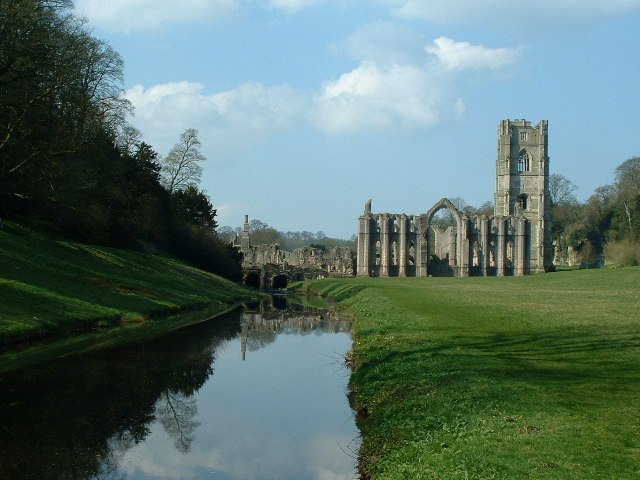
Fountains Abbey, Yorkshire, founded in 1132. Monasteries were about the only places with effective public health systems in the Middle Ages.
Roman Public Health systems had collapsed and so public health was generally poor in the Middle Ages:
Towns continued to grow, this meant that conditions got worse as little money was spent on improving facilities.
Drinking water was usually dirty as it was often taken from the same rivers where sewage was dumped; most people drank beer instead.
There was no effective sewage system in towns and cess pits were often built next to wells.
However there was some progress: Councils tried to build latrines (toilets) and to stop people throwing the remains of animals in the street, but these were not very effective.
Monasteries had the best public health facilities as they were built away from the town and people in the countryside were usually healthier as it wasn't overcrowded.
Roman Public Health systems had collapsed as society lacked the money and the technology to maintain them. Public health was therefore generally poor in towns in the Middle Ages:
Towns continued to grow and conditions worsened as little money was spent on improving facilities.
Water quality deteriorated and it was usually contaminated. Drinking water was often taken from the same rivers where sewage was dumped; most people drank beer instead. Cess pits were often built next to wells.
There was no effective sewage system in towns. Where they existed, sewers were often blocked and overflowed. They usually just took sewage to a river or stream. Many toilets were built above rivers.
Streets became even more filthy as towns grew and were full of animal dung, carcasses, human sewage and rubbish.
However there was some progress: Large public baths called stewes were occasionally used by people. Councils tried to enforce laws such as building latrines, banning people throwing remains of animals in the street and fining people for littering. These laws, though, were not very effective.
Monasteries had the best public health facilities as they were built away from towns. They were also wealthy and promoted cleanliness and regular bathing.
People in the countryside were usually healthier as it wasn't overcrowded.
Roman Public Health systems had collapsed as society lacked the money and the technology to maintain them. Public health was therefore generally poor in towns in the Middle Ages:
Towns continued to grow and conditions worsened as little money was spent on improving facilities.
Water quality deteriorated and it was usually contaminated. Drinking water was often taken from the same rivers where sewage was dumped; most people drank beer instead. Cess pits were often built next to wells.
There was no effective sewage system in towns. Where they existed, sewers were often blocked and overflowed. They usually just took sewage to a river or stream. Many toilets were built above rivers.
Streets became even more filthy as towns grew and were full of animal dung, carcasses, human sewage and rubbish.
However there was some progress: Large public baths called stewes were occasionally used by people. Councils tried to enforce laws such as building latrines, banning people throwing remains of animals in the street and fining people for littering. These laws, though, were not very effective.
Monasteries had the best public health facilities as they were built away from towns. They were also wealthy and promoted cleanliness and regular bathing.
People in the countryside were usually healthier as it wasn't overcrowded.