Hospitals in the Middle Ages were basic and mostly offered care rather than cure. About half of all hospitals were devoted to looking after the poor and the elderly who were given prayer rather than treatments. Hospitals would not admit those with infectious diseases so about 30% of hospitals were for those with leprosy, but they offered no medical treatment. About 10% of hospitals gave shelter to travellers and pilgrims so only about 10% of hospitals cared for the sick. Hospitals were controlled by the Church and usually run by monks or nuns. They had no doctors and would have altars in the wards.
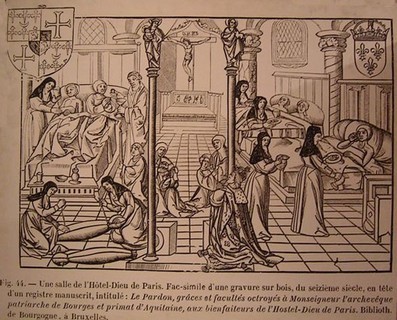
A medieval hospital. Note the religious imagery.
Hospitals in the Middle Ages were basic and mostly offered care rather than cure. About half of all hospitals were devoted to looking after the poor and the elderly who were given prayer rather than treatments.
Hospitals would not admit those with infectious diseases so about 30% of hospitals were for those with leprosy, but they offered no medical treatment. About 10% of hospitals gave shelter to travellers and pilgrims so only about 10% of hospitals cared for the sick. Hospitals were controlled by the Church and usually run by monks or nuns. They had no doctors and would have altars in the wards.
Hospitals in the Middle Ages were basic and mostly offered care rather than cure. About half of all hospitals were devoted to looking after the poor and the elderly who were given prayer rather than treatments. Hospitals would not admit those with infectious diseases so about 30% of hospitals were for those with leprosy, but they offered no medical treatment. About 10% of hospitals gave shelter to travellers and pilgrims so only about 10% of hospitals cared for the sick. Hospitals were controlled by the Church and usually run by monks or nuns. They had no doctors and would have altars in the wards.