

1905-1915 |
Middle Ages |
The Renaissance |
Industrial Revolution |
Twentieth Century |
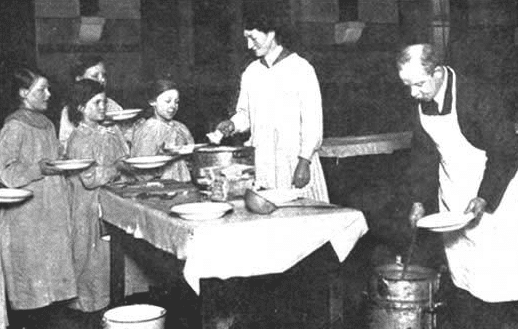
The Liberal Reforms
Why did the Liberal Government pass public health reforms?
By 1900, most people couldn't afford to see a doctor and general health was poor. 40% of recruits for the Boer War were declared medically unfit. Reports by Booth and Rowntree also showed how bad poverty in Britain was and changed attitudes. Booth found that 30% of Londoners lived in poverty and Rowntree discovered a similar proportion in York. They both argued that poverty was a major cause of illness and that people couldn't improve their situation without help. These findings led to much greater sympathy amongst the public and shocked the government into taking action.
By this time, Britain was a democracy with two thirds of adult men able to vote. This made government more responsive to the needs of ordinary people. The reforms also succeeded thanks to the determination and political skill of the Chancellor of the Exchequer, David Lloyd George. He was assisted by the King who helped to ensure the passing of the Parliament Act of 1911 which stopped the House of Lords from blocking his measures. Britain was also a wealthier country by this stage. All these factors contributed to a weakening of laissez-faire.
The main Liberal Reforms
National Insurance was a turning point in Public Health. It was a scheme that enabled working people to be able to see a doctor and claim sick pay if they were ill. However it didn't cover children, old people, most women or the unemployed.
Consequences of the reforms
Infant mortality dropped dramatically between 1900 and 1945, partly due to these reforms and also thanks to new breakthroughs like the diptheria vaccine and to rising incomes. However much poverty remained and infant mortality actually increased during the depression of the 1930s.