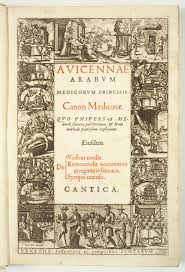


1025 |
Middle Ages |
The Renaissance |
Industrial Revolution |
Twentieth Century |
Islamic Medicine
In many ways Islamic medicine was more advanced than that found in Western Europe. By the later Middle Ages, ideas from the East reached the West, partly due to the Crusades and the Muslim rule of Spain.
• Caliphate – a single ruler of the Islamic world ensured peace and progression – in contrast to Dark Ages in Europe
• Books from the Greeks and Romans were translated into Arabic and stored in the Caliphate’s ‘House of Wisdom’
• The teachings of the Prophet Muhammad taught people to look for cures, unlike Christianity. Mental illness was seen as a disease that
needed treating whereas in Christianity it was a curse from God.
• Baghdad hospital treated patients and trained doctors. It welcomed Muslims and non-Muslims.
Rhazes
• Emphasised the importance of observation of a patient
• Questioned Galen in his book, ‘Doubts about Galen’
• Discovered the symptoms of smallpox
• Hung up meat in different parts of
the city and built a hospital where it was slowest to rot.
Avicenna
• Wrote 'Canon of Medicine' in 1025, the main
textbook used up until 17th century