John Hunter revolutionised the training of surgeons. Before Hunter, surgeons were trained on the job by working with another surgeon. Hunter collected a huge range of specimens of animals, plants and human body parts to enable his students to study anatomy more accurately. He opened an Anatomy Theatre and published a range of books. Hunter made discoveries about infections, venereal disease (STIs), treating gunshot wounds, cancer and the circulation of the blood. One of his students was Edward Jenner.
In 1815 the Apothecaries Act ensured that doctors had to pass exams and in 1858 the Medical Act set up the General Medical Council to regulate doctors.
In 1865 Elizabeth Garrett Anderson became the first English woman to qualify as a doctor. She was greatly opposed by the medical profession and had to study in Scotland and in Paris. After she qualified, the rules were changed to stop other women following suit, but the ban on women becoming doctors was then overthrown by 1877.
By the late 1800s, doctors' training had been transformed by germ theory. Doctors now learned about this and training became more practical.
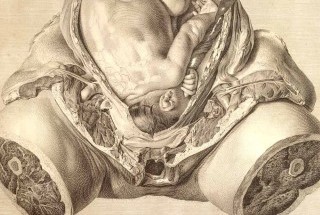
An illustration from Hunter's book.
John Hunter revolutionised the training of surgeons. He collected a huge range of specimens of animals, plants and human body parts to enable his students to study anatomy more accurately. He opened an Anatomy Theatre and published a range of books.
In 1815 the Apothecaries Act ensured that doctors had to pass exams and in 1858 the Medical Act set up the General Medical Council to regulate doctors.
By the late 1800s, doctors' training had been transformed by germ theory. Doctors now learned about this and training became more practical.
John Hunter revolutionised the training of surgeons. Before Hunter, surgeons were trained on the job by working with another surgeon. Hunter collected a huge range of specimens of animals, plants and human body parts to enable his students to study anatomy more accurately. He opened an Anatomy Theatre and published a range of books. Hunter made discoveries about infections, venereal disease (STIs), treating gunshot wounds, cancer and the circulation of the blood. One of his students was Edward Jenner.
In 1815 the Apothecaries Act ensured that doctors had to pass exams and in 1858 the Medical Act set up the General Medical Council to regulate doctors.
In 1865 Elizabeth Garrett Anderson became the first English woman to qualify as a doctor. By the late 1800s, doctors' training had been transformed by germ theory. Doctors now learned about this and training became more practical.
John Hunter revolutionised the training of surgeons. Before Hunter, surgeons were trained on the job by working with another surgeon. Hunter collected a huge range of specimens of animals, plants and human body parts to enable his students to study anatomy more accurately. He opened an Anatomy Theatre and published a range of books. Hunter made discoveries about infections, venereal disease (STIs), treating gunshot wounds, cancer and the circulation of the blood. One of his students was Edward Jenner.
In 1815 the Apothecaries Act ensured that doctors had to pass exams and in 1858 the Medical Act set up the General Medical Council to regulate doctors.
In 1865 Elizabeth Garrett Anderson became the first English woman to qualify as a doctor. She was greatly opposed by the medical profession and had to study in Scotland and in Paris. After she qualified, the rules were changed to stop other women following suit, but the ban on women becoming doctors was then overthrown by 1877.
By the late 1800s, doctors' training had been transformed by germ theory. Doctors now learned about this and training became more practical.