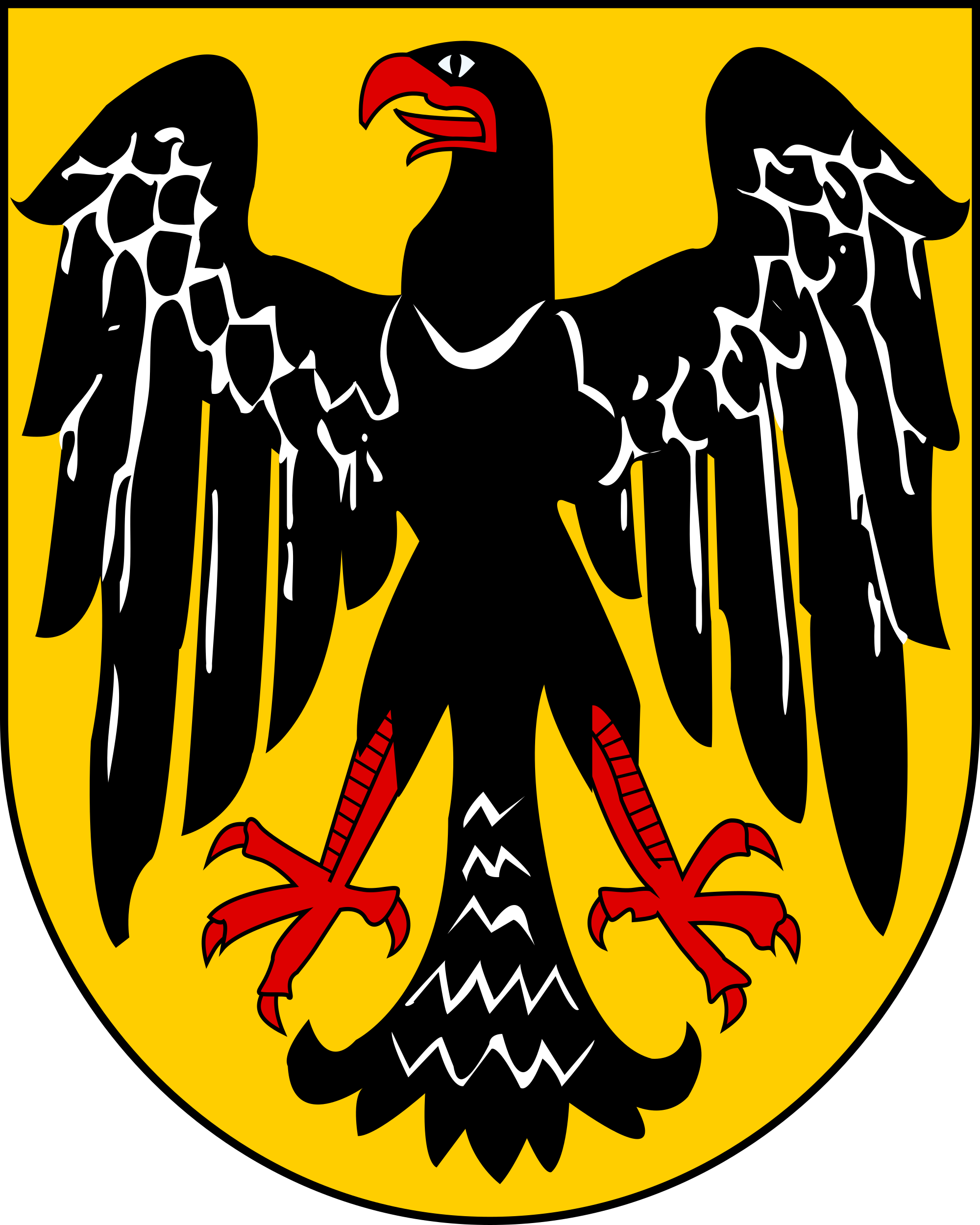
A constitution is a set of rules for how a country should be governed. In 1919, a new constitution was drawn up for Germany
in the town of Weimar so the new government was known as the Weimar Republic. (A republic is a country without a king or queen).
Key Features:
- All men and women over 21 would have the vote.
- There would be a Parliament, known as the Reichstag.
- The Prime Minister (known as the Chancellor) would run the country day to day.
- The President could appoint the Chancellor.
The Constitution was fair but had two main problems:
- The voting system used was Proportional Representation which led to weak coalition governments.
- The President had too much power and could rule without the Reichstag in emergencies.
A constitution is a set of rules for how a country should be governed. In 1919, a new constitution was drawn up for Germany in the town of Weimar so the new government was known as the Weimar Republic. (A republic is a country without a king or queen).
Key Features:
- All men and women over 21 would have the vote.
- There would be a Parliament, known as the Reichstag.
- The Prime Minister (known as the Chancellor) would run the country day to day.
- The President could appoint the Chancellor.
The Constitution was fair but had two main problems:
- The voting system used was Proportional Representation which led to weak coalition governments. Decision making was therefore
usually slow.
- The President had too much power and could rule without the Reichstag in emergencies using Article 48. This was undemocratic.
A constitution is a set of rules for how a country should be governed. In 1919, a new constitution was drawn up for Germany in the town of Weimar so the new government was known as the Weimar Republic. (A republic is a country without a king or queen).
Key Features:
- All men and women over 21 would have the vote.
- There would be a Parliament, known as the Reichstag.
- The Prime Minister (known as the Chancellor) would run the country day to day.
- The President could appoint the Chancellor.
The Constitution was fair but had two main problems:
- The voting system used was Proportional Representation which led to weak coalition governments. Decision making was therefore
usually slow.
- The President had too much power and could rule without the Reichstag in emergencies using Article 48. This was undemocratic.
Later, by 1932 these weakenesses meant that the government could barely function. The Nazis deliberately exploited divisions to ensure that measures
were not passed by the Reichstag and Hindenburg was forced to govern using Article 48.