

1939-1945 |
Germany under the Kaiser |
The Weimar Republic |
Nazi Rise to Power |
Life under the Nazis |
Impact of World War II
Initial support for the war
At first ordinary Germans were not really affected by the war as it went well. Propaganda posters convinced most Germans that they could win the war and many people supported the war as a quick victory was expected. However, life in Germany became increasingly difficult during the war.
Difficulties at home
The key setbacks in the war were that they failed to defeat Britain in 1940-41, they could not defeat Russia from 1941 and the US joined the war on the allies' side in December 1941. As the war progressed:
- Shortages: food and fuel were rationed. By 1942 there was a shortage of many goods (including toilet paper) and a Black Market grew up.
- Bombing: about 600 000 civilians were killed by Allied bombing raids and 750 000 injured. 2 million homes were destroyed and those that were re-housed were often done so in very poor conditions.
- Women were now drafted into the labour service, the DFW, to support the war effort. About 3 million were conscripted, although only about 1 million served. The NSF taught women how to feed their families on rations and how to fight fires.
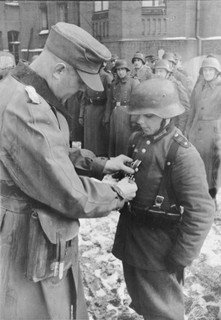
- Boys in the Hitler Youth were drafted into the fire service and later the army. As the Russians invaded Germany from the East in 1945, boys as young as 13 or 14 helped to defend Berlin.
- Girls were expected to help with evacuation camps for younger children and they helped with the harvest.
The final years of the war
Conditions became worse towards the end of the war as Germany was sustaining heavy losses on both the Western and Eastern fronts. Over 2 million soldiers were killed and over 4 million were injured. On the home front, not everyone suffered the same. Those who lived on farms could grow their own food and life was less difficult for those who could afford black market goods or had goods to trade.