In January 1933 Hitler became Chancellor of Germany (like Prime Minister). This happened for several reasons:
Versailles: A long-term reason - Hitler promised to rip up the Treaty of Versailles and make Germany 'great' again.
Organisation of the Nazi Party: After Hitler had been jailed following the Munich Putsch (1923), he decided to try to win power through elections. The Nazis re-organised the party and trained their members in public speaking. Gauleiters were appointed in every district to oversee election campaigns. The Nazis also updated their policies based on their popularity. For example, they emphasised their anti-semitism to appeal to the working classes and promised to support small businesses and farmers to win over the middle classes. The Nazis also ditched the policy of nationalisation in order to gain the support of industrialists. When the Great Depression came, they were more successful than other extremist parties like the KPD (Communists).
Depression: Hitler promised jobs which gained the support of the huge numbers of unemployed during the Great Depression (there were 6m by 1932).
KPD (Communists): The Nazis also promised to smash communism. The KPD had been doing well in elections (increasing their seats in the Reichstag from 54 to 89) during the Depression as they promised a better life for workers. This terrified the middle classes who therefore supported the Nazis as the safest way to prevent a communist revolution.
Ability: Hitler was a brilliant speaker and his oratory gained huge support. Goebbels organised large rallies and used new technology; Hitler was flown around the country during the presidential election of 1932 to ensure that he reached as wide an audience as possible.
As a result of all these reasons, the Nazis performed well in elections, becoming the largest party in the Reichstag by 1932. Their seats rose from 12 in 1928 to 230 in July 1932. This gave them 37% of the seats (falling to 32% in November) but not an overall majority.
The final reason why Hitler was appointed Chancellor was that he was underestimated. President Hindenburg and von Papen (Chancellor in 1932) both disliked Hitler but they believed that they could control him. When the Chancellorships of both von Papen and then von Schleicher failed, Hindenburg had little option but to appoint Hitler as Chancellor with von Papen as vice-Chancellor.
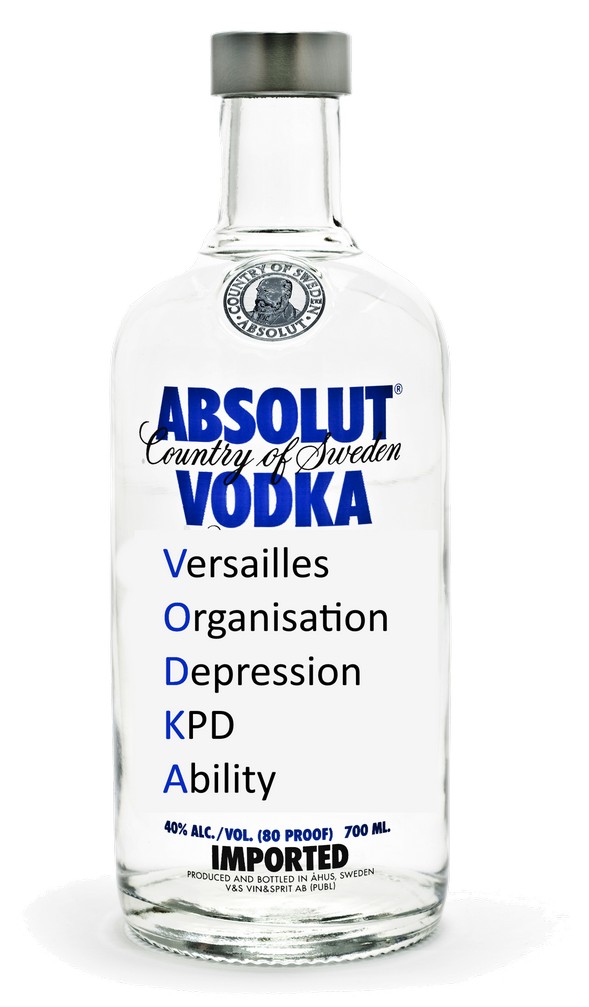
Use the acronym V.O.D.K.A. to remember the reasons why Hitler became Chancellor in January 1933. Ironically, he didn't drink.
Stretch & Challenge: how do the different factors link together? Which was the most important?
In January 1933 Hitler became Chancellor of Germany (like Prime Minister). This happened for several reasons:
Versailles: A long-term reason - Hitler promised to rip up the Treaty of Versailles and make Germany 'great' again.
Organisation of the Nazi Party: After Hitler had been jailed following the Munich Putsch (1923), he decided to try to win power through elections. The Nazis re-organised the party and trained their members in public speaking. They also chose policies that were popular. When the Great Depression came, they were more successful than other extremist parties like the KPD (Communists).
Depression: Hitler promised jobs which gained the support of the huge numbers of unemployed during the Great Depression. He also promised to smash communism and this pleased the middle classes who were terrified of a communist revolution.
In January 1933 Hitler became Chancellor of Germany (like Prime Minister). This happened for several reasons:
Versailles: A long-term reason - Hitler promised to rip up the Treaty of Versailles and make Germany 'great' again.
Organisation of the Nazi Party: After Hitler had been jailed following the Munich Putsch (1923), he decided to try to win power through elections. The Nazis re-organised the party and trained their members in public speaking. They also chose policies that were popular. When the Great Depression came, they were more successful than other extremist parties like the KPD (Communists).
Depression: Hitler promised jobs which gained the support of the huge numbers of unemployed during the Great Depression (there were 6m by 1932).
KPD (Communists):The Nazis also promised to smash communism. The KPD had been doing well in elections during the Depression as they promised a better life for workers. This terrified the middle classes who therefore supported the Nazis as the safest way to prevent a communist revolution.
Ability: Hitler was a brilliant speaker and his oratory gained huge support. Goebbels organised large rallies to ensure that Hitler reached as wide an audience as possible.
As a result of all these reasons, the Nazis performed well in elections, becoming the largest party in the Reichstag by 1932. Their seats rose from 12 in 1928 to 230 in July 1932. By January 1933 Hindenburg had no option but to appoint Hitler as Chancellor.
In January 1933 Hitler became Chancellor of Germany (like Prime Minister). This happened for several reasons:
Versailles: A long-term reason - Hitler promised to rip up the Treaty of Versailles and make Germany 'great' again.
Organisation of the Nazi Party: After Hitler had been jailed following the Munich Putsch (1923), he decided to try to win power through elections. The Nazis re-organised the party and trained their members in public speaking. Gauleiters were appointed in every district to oversee election campaigns. The Nazis also updated their policies based on their popularity. For example, they emphasised their anti-semitism to appeal to the working classes and promised to support small businesses and farmers to win over the middle classes. The Nazis also ditched the policy of nationalisation in order to gain the support of industrialists. When the Great Depression came, they were more successful than other extremist parties like the KPD (Communists).
Depression: Hitler promised jobs which gained the support of the huge numbers of unemployed during the Great Depression (there were 6m by 1932).
KPD (Communists): The Nazis also promised to smash communism. The KPD had been doing well in elections (increasing their seats in the Reichstag from 54 to 89) during the Depression as they promised a better life for workers. This terrified the middle classes who therefore supported the Nazis as the safest way to prevent a communist revolution.
Ability: Hitler was a brilliant speaker and his oratory gained huge support. Goebbels organised large rallies and used new technology; Hitler was flown around the country during the presidential election of 1932 to ensure that he reached as wide an audience as possible.
As a result of all these reasons, the Nazis performed well in elections, becoming the largest party in the Reichstag by 1932. Their seats rose from 12 in 1928 to 230 in July 1932. This gave them 37% of the seats (falling to 32% in November) but not an overall majority.
The final reason why Hitler was appointed Chancellor was that he was underestimated. President Hindenburg and von Papen (Chancellor in 1932) both disliked Hitler but they believed that they could control him. When the Chancellorships of both von Papen and then von Schleicher failed, Hindenburg had little option but to appoint Hitler as Chancellor with von Papen as vice-Chancellor.