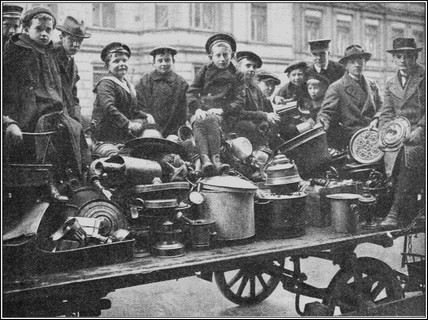
At first most Germans supported the war because they thought it would be short and successful. By 1915, food shortages started to be experienced because of the British naval blockade of German ports. By 1917 war weariness had set in and this turned to anger in 1918. There were riots and protests on the streets and this became known as the German Revolution. The Kaiser fled. The war was ended on 11th November when the Armistice was signed. Many people in Germany wrongly believed that the war could have been won if the politicians hadn't surrendered. This was known as the 'Stab in the Back Myth' and the politicians who signed the Armistice were called 'November Criminals.'
At first there was a surge of patriotism and most Germans supported the war because they thought it would be short and successful. By 1915, however, food shortages resulting from the British naval blockade of German ports started to cause protests. By 1917 war weariness had set in and this turned to anger in 1918. There were strikes, riots and protests on the streets - most famously the mutiny at Kiel Naval Base. This period of instablility is called the German Revolution. At first the Kaiser tried to avoid blame for the impending loss of the war by handing power to politicians (the Revolution from Above). However, as defeat in the war became certain the Kaiser fled.
The war ended on 11th November when the Armistice was signed. Many people in Germany wrongly believed that the war could have been won if the politicians hadn't surrendered. This was known as the 'Stab in the Back Myth' and the politicians who signed the Armistice were called the 'November Criminals.'
At first there was a surge of patriotism and most Germans supported the war because they thought it would be short and successful. By 1915, however, food shortages resulting from the British naval blockade of German ports started to cause protests and these increased to as many as 10 000 people by 1916. By 1917 war weariness had set in and this turned to anger in 1918. Food and power shortages worsened and hundreds of thousands died in the flu epidemic. There were strikes, riots and protests on the streets - most famously the mutiny at Kiel Naval Base. This period of instablility is called the German Revolution. At first the Kaiser tried to avoid blame for the impending loss of the war by handing power to politicians such as Ebert (the Revolution from Above). However, as defeat in the war became certain the Kaiser abdicated on 9 November 1918 and a Republic was declared.
The war ended on 11th November with the signing of the Armistice. Many people in Germany wrongly believed that the war could have been won if the politicians hadn't surrendered. This was known as the 'Stab in the Back Myth' and the politicians who signed the Armistice were called the 'November Criminals.'