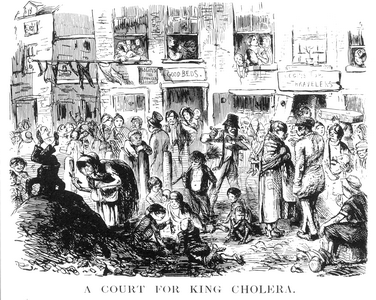
Towns became terribly overcrowded and very unhealthy.
Houses were extremely cramped with large families sharing a single room or even a cellar. They often lived with their animals too.
Health: In the poorest areas, half of babies died before they were 5 years old as hygiene was so poor. Diseases such as typhoid and cholera were common. By the 1870s, however, the government started to take action to provide clean sewers and safe drinking water.
Transport became much easier, with better roads, the introduction of canals and the invention of trains. The first passenger rail service was set up in 1830, between Liverpool and Manchester. The railways led to new goods (such as fresh fish inland or national newspapers) and improved transport made it easier to trade. The trains also created the suburbs as workers could live outside the city centre; seaside holidays became popular and the national Football League began as teams and fans could travel further for games.
Britain became wealthier overall but there was still crippling poverty.
Working Conditions
Working conditions were appalling with very long hours, low pay and the danger of injury. Many had to work for 16 hours per day, 6 days per week. Children could be beaten for talking or being late. Some were seriously injured or killled by machinery. Conditions in coal mines were also unpleasant.
There were some improvements during Victorian times. The 1844 Factory Act limited work to 9 hours a day for 9-13 year olds and set up inspectors to check that factories were safe. Later on, basic education for children became compulsory too.
Cholera spread quickly in unhygienic conditions.
Living Conditions
Towns became terribly overcrowded and very unhealthy.
Houses were extremely cramped with large families sharing a single room or even a cellar.
Health: In the poorest areas, half of babies died before they were 5 years old.
Transport became much better, bringing new goods and opportunities like holidays.
Britain became wealthier overall but there was still huge poverty.
Working Conditions
Working conditions were very poor with long hours and low pay.
Living Conditions
Towns became terribly overcrowded and very unhealthy.
Houses were extremely cramped with large families sharing a single room or even a cellar. They often lived with their animals too.
Health: In the poorest areas, half of babies died before they were 5 years old as hygiene was so poor. Diseases such as typhoid and cholera were common.
Transport became much easier, with better roads, the introduction of canals and the invention of trains. This led to new goods (such as fresh fish inland or national newspapers) and it made it easier to trade. The trains also created the suburbs as workers could live outside the city centre; seaside holidays became popular and the national Football League began.
Britain became wealthier overall but there was still huge poverty.
Working Conditions
Working conditions were appalling with very long hours, low pay and the danger of injury. Many had to work for 16 hours per day, 6 days per week. Children could be beaten for talking or being late. Some were seriously injured or killled by machinery. Conditions in coal mines were also unpleasant.
There were some improvements during Victorian times. For example, the 1844 Factory Act limited work to 9 hours a day for 9-13 year olds.
Living Conditions
Towns became terribly overcrowded and very unhealthy.
Houses were extremely cramped with large families sharing a single room or even a cellar. They often lived with their animals too.
Health: In the poorest areas, half of babies died before they were 5 years old as hygiene was so poor. Diseases such as typhoid and cholera were common. By the 1870s, however, the government started to take action to provide clean sewers and safe drinking water.
Transport became much easier, with better roads, the introduction of canals and the invention of trains. The first passenger rail service was set up in 1830, between Liverpool and Manchester. The railways led to new goods (such as fresh fish inland or national newspapers) and improved transport made it easier to trade. The trains also created the suburbs as workers could live outside the city centre; seaside holidays became popular and the national Football League began as teams and fans could travel further for games.
Britain became wealthier overall but there was still crippling poverty.
Working Conditions
Working conditions were appalling with very long hours, low pay and the danger of injury. Many had to work for 16 hours per day, 6 days per week. Children could be beaten for talking or being late. Some were seriously injured or killled by machinery. Conditions in coal mines were also unpleasant.
There were some improvements during Victorian times. The 1844 Factory Act limited work to 9 hours a day for 9-13 year olds and set up inspectors to check that factories were safe. Later on, basic education for children became compulsory too.